Toronto-based indie-folk troubadour John Muirhead shares his new single, “Loved You Well,” a tender and reflective meditation on unrequited love, yearning, and the quiet spaces where connection almost blooms. Rooted in simplicity and intimacy, the track captures those fleeting, ordinary moments that linger long after they’ve passed; the ones that live rent-free in our hearts because nothing ever fully came of them.
“‘Loved You Well’ is about replaying moments that never quite turned into anything,” explains Muirhead. “It was inspired by a real date where, on paper, nothing important happened. But that’s exactly the point. Sometimes the absence of something becomes the thing you can’t stop thinking about.”
Recorded in a single, immersive day, the song is deliberately stripped back to feel as if Muirhead is performing in the same room as the listener. Acoustic guitar and vocals form the foundation, with piano, pedal steel, and harmonies by Clayton White layered organically to preserve character and intimacy. “We captured something special,” Muirhead says. “I wanted the song to feel like being alone with your memories, wondering “what if…””
Strange Plants lean into heartfelt nostalgia and soaring retro-pop energy on “Lay Your Mind,” an infectious new single that marks the first release in a forthcoming collection of songs arriving throughout 2026.
Drawing inspiration from the new wave and post-punk textures of artists like Simple Minds, The Cure, and The Cars, “Lay Your Mind” blends emotional depth with an undeniable melodic lift. Anchored by a shimmering groove and an instantly singable chorus, the track captures the band’s ability to balance introspection with momentum and create music that feels both personal and expansive.
The song’s origins are as intimate as its message. “Travis (Flint) sent me a voice note of him playing guitar while bathing his infant son,” explains songwriter Matt Brannon. “It was a really cool musical motif that became the basis for the verses.” From that initial spark, the song came together quickly, written and completed during the same period the band’s debut album was being mixed and mastered. In a rare burst of inspiration, “Lay Your Mind” moved from voice note to finished master in less than two weeks.
At its core, the song serves as a love letter to the steady figures in our lives, the people who absorb chaos with patience and understanding. The title reflects that sense of emotional grounding, celebrating those who remain present when everything else feels uncertain.
Musically, the band leaned fully into the song’s natural DNA. The rhythmic pulse of the verses provides a distinctive foundation, while production choices emphasize analog warmth and classic new wave atmosphere. The result is a track that feels timeless without losing its immediacy, carried by the emotional clarity that defines Strange Plants’ songwriting.
Toronto-based rock n’ soul duo Glimmerjean & Goode return with “Injured Romantics,” a moody, rhythm-driven disco-rock single that explores the existential nature of life and love. Blending darker lyrical themes with an infectious groove, the track finds the duo leaning into unexpected territory while continuing to expand their evolving sound.
The song reveals the cynicism that comes in moments of dark reflection and how our experiences can shape (and sometimes harden) the way we move through life. The title itself speaks to what becomes of those that can no longer romanticize life.
“Injured Romantics” began in an unlikely place during the early days of the pandemic, when Linny and friend/neighbour Yulia spent time exchanging poetry and writing together outdoors. What started as a poem gradually transformed into a song, with Scotty B. Goode helping shape the piece musically. As the arrangement developed, the track took on a life of its own, driven by an unexpected disco-inspired rhythm that set it apart from their previous work.
Stylistically, the song emerged from an instinct to follow the mood of the lyrics. With darker imagery including references to “Russian satellites,” the band found themselves drawn toward a rolling bass groove and a distinctive 70s/80s Soviet disco influence. Once that direction revealed itself, the rest of the production unfolded naturally, resulting in a sound that feels both retro and uniquely their own.
As part of a planned series of singles, “Injured Romantics” has helped shape the sonic direction of Glimmerjean & Goode’s forthcoming debut EP, with its rhythmic energy and darker emotional palette informing the material still to come.
Lebanese-Canadian artist Raphaela returns with “Lose This Race,” a romantic, energetic pop single that captures the moment love sneaks past your defenses and the instant you realize it’s already too late to run. Vivid and cinematic, the track transforms the emotional rush of falling for someone into a high-stakes chase, balancing exhilaration with vulnerability and surrender.
Inspired by the quiet shock of seeing someone familiar in an entirely new light, “Lose This Race” lives in that split second where the body knows before the mind catches up. “In the world of this song, it’s someone you’ve known for a while,” Raphaela explains. “Then one day, you’re sitting together and it’s like a light bulb goes off. The veil drops. You’re seeing them in a completely new light, and you can feel it in your body before your brain catches up. You try to run from it, you try to rationalize it, but it’s too late. You already lost the moment you realized you care.”
The title plays with the illusion of escape and the belief that love is something you can outrun if you move fast enough. “It’s like you’re sprinting in the opposite direction, convinced you can outpace it,” she says. “But Cupid is chasing you with the arrow already drawn. You never really stood a chance. Your odds of winning are bleak from the start.” Rather than framing that loss as defeat, the song reframes it as a choice: deciding that risking heartbreak is better than staying safe and never loving fully at all.
Musically, “Lose This Race” opens with an unexpected elegance. Producer Josh Bogert sets the stage with an introduction that feels lifted from the opening scene of a period drama, immediately establishing a sense of fate before the song snaps into bright, rhythmic pop. Soaring strings and playful melodies drive the track forward, mirroring the chaos and momentum of falling fast where romance and panic coexist.
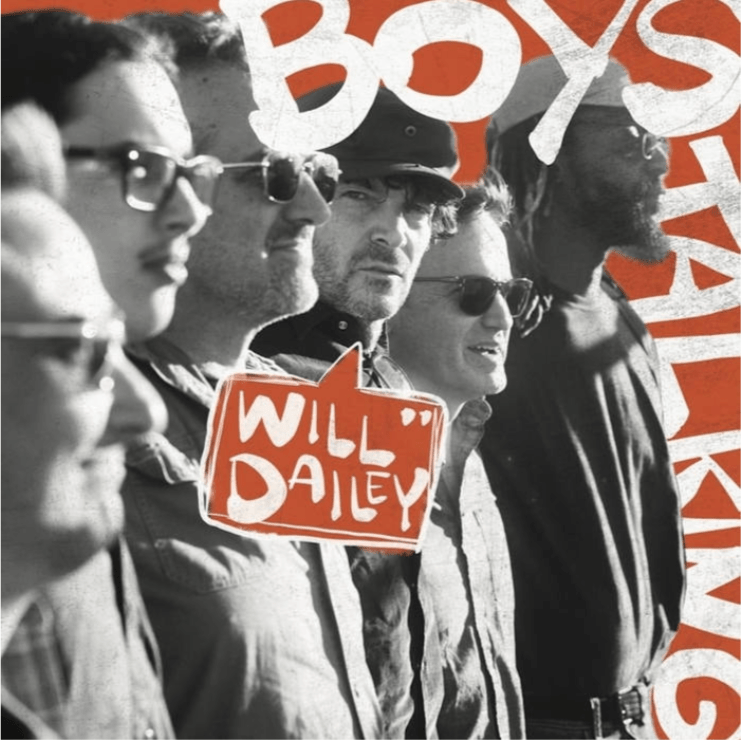
Not every album arrives with the intention of redefining an artist’s legacy. Some quietly reshape it. BOYS TALKING, Will Dailey’s seventh release, belongs firmly in that second category.
From its conception to its release, the album reflects a deeper philosophical shift. Rather than chasing immediacy, Dailey embraced slowness. Rather than competing for attention, he prioritized connection. This ethos shapes every element of the record, from its songwriting to its distribution.
The album emerged from a pool of nearly eighty songs, distilled into ten. That rigorous selection process sharpened its emotional focus: men attempting to communicate, navigating vulnerability, restraint, frustration, and longing. These themes resonate deeply in a cultural moment increasingly aware of emotional literacy and mental health, yet often lacking models for genuine expression.
Dailey approaches these subjects with humility. He doesn’t offer solutions or moral conclusions. Instead, he allows emotional states to coexist: strength alongside fragility, clarity beside confusion. The songs unfold like conversations overheard rather than speeches delivered.
Musically, BOYS TALKING blends warmth and restraint. Folk textures meet soul rhythms and understated rock energy, creating an atmosphere that feels organic and lived-in. The live recording approach enhances this authenticity, capturing musicians interacting in real time and preserving subtle imperfections.
Highlights include “Send Some Energy,” a quiet meditation on grief, and “Make Another Me,” featuring Juliana Hatfield, which reflects on isolation in an increasingly artificial world. “One at a Time” injects rhythmic urgency, balancing the album’s introspection with forward motion.
What elevates BOYS TALKING beyond strong songwriting is its integrated philosophy. The album’s release strategy mirrors its emotional values. For eighteen months, it existed only as a physical object or direct download, inviting listeners to engage intentionally rather than passively. This choice reframed the relationship between artist and audience, emphasizing trust over reach.
Today’s streaming release does not abandon that principle. One track remains exclusive to physical formats, honoring those who invested in the album early and preserving a sense of intimacy.
Dailey’s long-standing reputation as an artist’s artist gives additional weight to this approach. Over fifteen years, he has built a career rooted in integrity, collaboration, and creative autonomy. His refusal to conform to industry formulas has allowed his work to evolve naturally, culminating in an album that feels both deeply personal and culturally resonant.
BOYS TALKING may ultimately stand as a turning point—not just within Dailey’s discography, but within broader conversations about how music is made, shared, and experienced. It suggests that patience can still generate meaning, that vulnerability still holds power, and that art need not shout to be heard.
In a time of noise and acceleration, Will Dailey offers something rare: stillness, sincerity, and space.
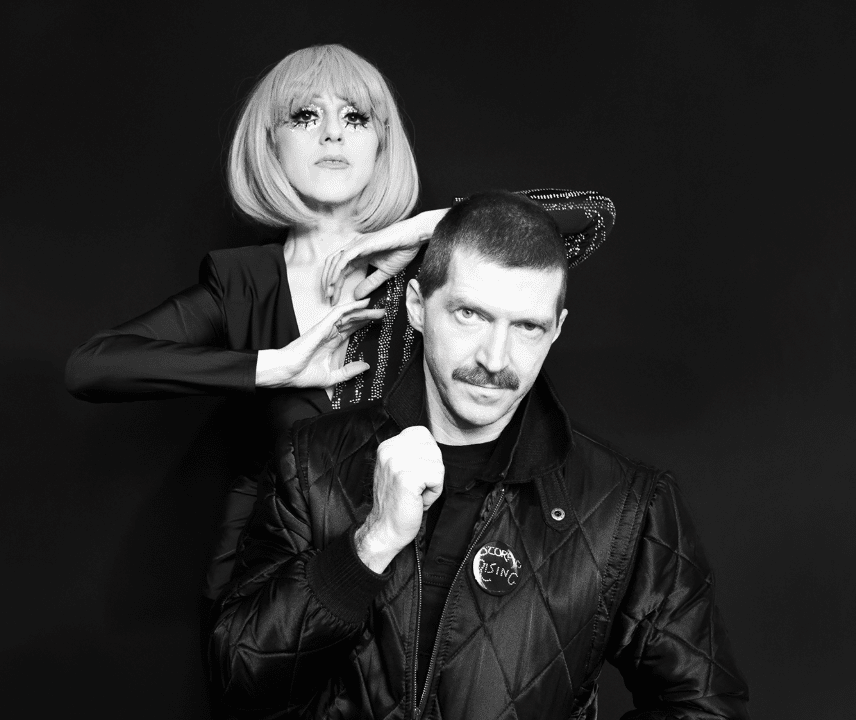
12090 A.D. conjures a world where time collapses—where the neon-lit shadows of late 70s Berlin bleed into the velvet darkness of a Lynch fever dream. Led by visionary drummer/composer Tim Kuhl and downtown icon Anna Copa Cabanna, this Brooklyn-based synth-driven dream pop duo crafts sonic landscapes that feel both ancient and futuristic, intimate and infinite. Today, we announce their self-titled debut album, along with their first single “Valediction.”
Tim: The title for the track is inspired by the comic “V for Vendetta” by the great Alan Moore. The music started to form after many late nights listening to synth maestro Johnny Jewel (Italians Do it Better). The song was originally conceived as an instrumental. Over time I could hear a voice singing and speaking to me through the mist. Once Anna sank her teeth into it, I knew we were beginning a journey into unknown territory
Anna: Tim gave me the title so I knew it would be about saying “goodbye” in some way. Once I heard the music, an image of Grace Jones singing at 3am in a Paris nightclub in the early 80s jumped into my head immediately! Singing to all those people that are still out. Seducing them. I pictured the smoke, the colors, the arms, legs, and mouths. It felt romantic in a tough, secret way. There are so many things we can say “goodbye” to, and they’re not all bad…
Kuhl’s compositional architecture provides the foundation—hypnotic, precise, pulsing with the mechanical soul of Suicide and the atmospheric weight of Portishead. Over this, Copa Cabanna’s haunting vocals drift and cut like fog through streetlights, her magnetic stage presence transforming each performance into a noir ritual. Comparisons to Twin Peaks and Beach House only hint at the band’s ability to make beauty feel dangerous, to turn melody into mystery.
In their live shows, 12090 A.D. doesn’t just perform—they manifest an atmosphere, pulling audiences into a liminal space where every note feels like a transmission from some forgotten, dream-soaked future. This is music for 4 AM drives through empty cities, for moments when the veil between worlds grows thin.
Tim Kuhl is an American drummer, composer, and producer known for his versatility across jazz, rock, and electronic music. Originally from Baltimore and now based in Brooklyn, he has built a reputation as both a prolific solo artist and a highly sought-after sideman, performing and touring with Sean Lennon (The Ghost of a Saber Tooth Tiger), Zola Jesus, Margaret Glaspy, and jazz bassist Michael Formanek.
His solo work blends indie-jazz with cinematic 80s-style synths and electronic production. Notable albums include 1982 (2015), composed entirely on an iPad while on tour, and Sky Valley (2018). Kuhl’s sound is characterized by a stripped-down approach that emphasizes texture and the integration of diverse influences, ranging from classical percussion to experimental free jazz. He is an official artist for Vater Percussion.
Anna Copa Cabanna
12090 A.D. reveals a darker, but still glam side of the “Always Entertaining” (Time Out) Australian Showgirl Anna Copa Cabanna who has played her xylophone, emceed roller discos, and taught her 1960s go-go dancing masterclass in venues around the world. She was the face and twirling body of THE DEBASER on The Pixies’ “Doolittle Tour,” sang about waste for a United Nations PSA, and fronts an AC/DC cover band.
A true chameleon, Anna “really draws the audience to her” (The New Yorker)
She is the official go-go dancer of the New York rock and roll scene and has opened for Booker T at the iconic Lincoln Center. Her special brand of vintage go-go dancing, and extravagant outfits have graced NY stages from Terminal 5 to Brooklyn Bowl, MassMoca to Joe’s Pub, working with countless luminaries including The B-52s’ Fred Schneider, Tony-winner Cole Escola (Oh Mary!) and Punk legends Tommy Ramone, James Chance, and Kid Congo Powers.
The Anna Copa Cabanna Show at Joe’s Pub—her multi-disciplinary homage to television specials of the 1970s—sold out in the East Village for ten years was heralded as “weird and wonderful” by the Sydney Morning Herald, and led her to be named one of “10 offbeat artists keeping the old, weird New York alive” by Flavorpill alongside Yoko Ono and Bill Cunningham.


 Modern Mystery
You must be logged in to post a comment.