Video Voyageur: 3Qs with Charlie PS

Vancouver-based rock singer Charlie PS has a sound that can be described as a sonic melting pot. Inspired by a wide variety of rock and blues from legends of the 20th century such as Stevie Nicks and Ann Wilson, to modern rock artists that include Grace Potter and ZZ Ward, Charlie borrows elements of strong vocals and energetic riffs and uses them to create her own blended sound rooted in modern-rock.

Her latest single, “Even If It Kills Me,” takes its dynamic chorus, layered with an ensemble of vocals and live horns and its modern rock inspired instrumentation and calls out to the risk takers and the secretly insecure, reminding them that sometimes it’s okay to just be you. “Even If It Kills Me” is the second of three singles to be released this year from her five song EP, also titled Even If It Kills Me, later in November.

Even If It Kills Me” is inspired by Charlie‘s journey through COVID after much self-work and going from a chronic overthinker to being in a much more peaceful and carefree head space, as well as the notion of persevering through things that you love to do, even if they aren’t always easy – for Charlie, this situation is about the music industry and being a musician.

1Tell us the story of this song, why did you choose to visualize this song specifically?

I chose to visualize “Even If It Kills Me” not only because it’s the title track from my upcoming EP but because I’d had the vision for the video in my head from the very beginning of writing the song.“Even If It Kills Me” highlights all of my flaws and insecurities in a very ‘loud and proud’ way and I wanted to create a video that came across that way visually as well. It was very freeing to just let loose and allow myself not to care how I looked on camera – whether I was letting out a huge double chinned laugh or I was posed in a way that wasn’t what I consider to be the ‘most flattering’, I wouldn’t have to act, I wouldn’t have to play a character, I would just get to be my authentic self and that’s exactly what happened.

2. What was the inspiration behind this video(visuals, storyline, etc.)?

I was inspired by The Beaches music video for their song “Grow Up Tomorrow” and I wanted to create my own version of it. “Even If It Kills Me” is, in a way, my anthem to myself and serves as a reminder that being 100% yourself is a much freer place than being weighed down by that self-appointed shame of being ‘too loud’ or ‘too annoying’. So many of my friends and I have talked about our bad habit of going home after a social event and overthinking and overanalyzing what we said and did, and I just wanted to be free of that mindset and preserve that mindset in a visual way that I could back on and think “Oh yeah! That’s what not giving a damn feels like!” and I hope those who watch the video come away with a similar sentiment.

We had a pretty loosely mapped out storyline, with most of the concrete ideas shot in my apartment in the morning but once we got to our second location and my friends arrived for the evening portion, we just let 90% of things be completely in the moment and unplanned because we wanted everyone to just let loose, have fun and be themselves.

3. What was the process of making this video?


I’ve been incredibly lucky in connecting with ‘Ranch Boy Productions’ because they are just so good at what they do. In the pre-planning stages, each team member had a job to do and everything fell together so quickly and easily, we were 100% prepared about a week before the shoot and there was no last minute scramble to get anything done. Once we had found a location I called up as many friends as I could, found some local alcohol sponsors and on the day of the shoot, made sure everyone was comfortable, fed and watered and it was pretty much a straightforward good time from there!

I feel that a lot of people agonize over their flaws and insecurities or just care too much and want to change into a version of themselves they think will make them happier. But I hope that “Even If It Kills Me” will help remind people that being the realest version of yourself and showing the world the good, the bad and the ugly is a much more freeing place to be in.

Video Voyageur: 3 Qs with José Lobo

In All Good Hope, the forthcoming debut album from singer, songwriter, and musician José Lobo, is a masterclass in intimacy. From the highly personal lyrical themes and sparse, delicate instrumentation, to the singing, which sounds like a friend whispering a secret into your ear, the experience of listening to In All Good Hope is akin to entering an inner sanctum, or what Lobo aptly refers to as “a reverie of the quotidian.” Originally hailing from Venezuela, Lobo has spent the better part of the last decade in a somewhat nomadic mode, splitting his time between his current homebase of Montreal, San Francisco’s Mission District, Paris, and also Hamilton, Ontario, where much of the album was recorded.

The title of his new single, “TBTBNM,” is a phrase he said a lot as a reply when someone asked him how he was doing, which literally translates to “All good, all good, nothing bad” from “todo bien todo bien nada mal.” It’s one of those phrases where depending where the comma is placed or the way that it is said, it can mean “Just pushing through” or “I’m thriving.” The lyrics really speak to those two corners of Lobo‘s emotional landscape.

1. Tell us the story of this song, why did you choose to visualize this song specifically? 
This song came to be during the winter of 2021 when I was feeling a little stuck in my reality and started making songs to have solo dance parties in my room when I was feeling tired of constantly diving into introspection. Honestly I failed regarding this considering the lyrics to this song are actually layered in reflections and in that way the song musically feels tropical and lyrically and visually are bucolic which is actually a sincere representation of how I tend to feel now that I think about it. When the song was ready I knew it would be one of the singles for the album and Fernando, the director thought it would be a good idea to make a video that does not necessarily aligns immediately with the energy of the song and I agreed with him and considering the song was created during the winter we both felt it was appropriate to also let the visuals assemble what winter urban exploring would look like for us.

2.What was the inspiration behind this video (visuals, storyline, etc.)?   

The inspiration for the video was really to document our trip to New York this past winter and with the super8 to dive further into that realm of nostalgia and to document everything as if “ the New York of today was like the one from yesterday, laying there timeless but in movement” says Fernando. For the visuals it came to be that the palette was influenced by the tones of urban industrial areas and there are also shots of us around the metro, just browsing around record shops, etc. There are also references to nyc shows (friends, Seinfeld) and although it was not planned, this now makes it feel as though yes the video had to be in New York.

3.What was the process of making this video?

The process was quite laid back, we just decided to record as much footage as possible and to let the places we were going guide us in a way. For example there is this shot where I am standing atop a pile of construction debris in this empty lot and really this location sort of made the video, we have this shot with the brick wall behind, this one where I am looking towards the Manhattan skyline and one where I clumsily run down the mountain of construction debris! All of this took place within this empty lot and to even get in there you had to go through this wooden sort of fence with nails sticking out and then once we shot everything around the lot, a drone started flying over us and we ran frantically towards the exit thinking a drone flying over us at the empty lot was a little too close to a black mirror episode haha. Now that I think about it, it’s funny because the song has this air of irreverence when it comes to finding oneself in movement and saying “who is gonna tell me that I can’t leave?!” And well that drone definitely told us we had to leave …

The Americans Blend Boundaries and Vision on Latest EP “Strays”

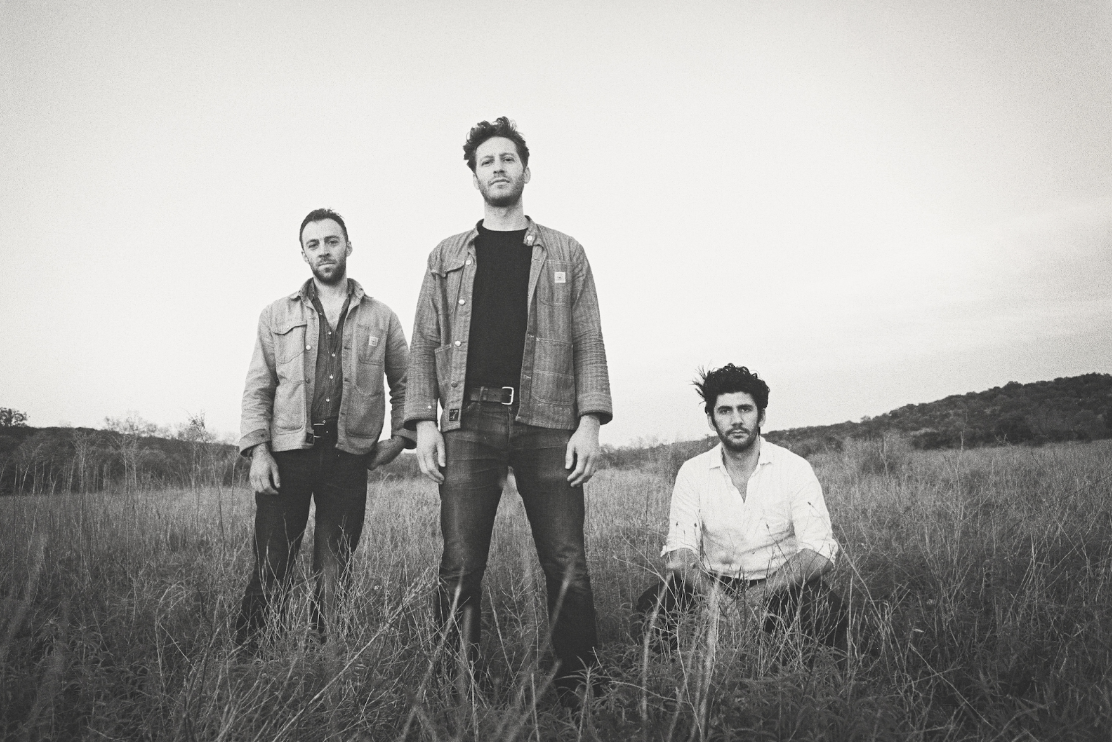
Acclaimed LA band the Americans have recently released their new EP “Strays,” which proves to be an outstanding collection of songs, blending both memoir and fiction, which have the ability to inspire you to reflect back on your own life and transport you to places which may well be long gone or at best a very distant memory.

The Americans are truly carving out a path for themselves as a renowned mainstay in the roots and Americana scene. The release follows the critically acclaimed album “Stand True,” from 2022, and it’s a very deliberate move towards a more refined sound than previous releases. 

Indeed, this album is very much a man, his guitar, and his reminiscences, although frontman Patrick Ferris is joined by Zac Sokolow (guitar), and Jake Faulkner (bass), in an engaging and understated way bandmates which gives the release a whole new level and depth to his passionate lyricism. 

“We write our songs inside-out,” says Patrick. “We grab hold of something minuscule and primitive—a simple turn of phrase or an unusual beat—and try to build a song around it. It’s inefficient, but when it works, it works.”

Songs such as “Kingdom” are wrapped up in a sense of longing and yearning, with the guitars echoing in the background really tugging at the heart strings. 

“When You Get Back” the lead single from the release is another beautifully contemplative song which helps to set the intimate tone for the EP.

The Americans theme of nostalgic reflection is brought to the forefront within each on the release.

Their live show, honed over many hundreds of performances, is something to behold. Chris Griffy (AXS) calls them “straight up blue-collar rock and roll in the style of Bruce Springsteen and John Mellencamp.” Steve Wildsmith (Daily Times) admires their “antThe band’s distinctive, powerful works have captured the attention of a number of stars. They’ve backed Nick Cave, Lucinda Williams, Ashley Monroe, and Devendra Banhart, and joined Ryan Bingham on four national tours. They worked closely with Jack White and T Bone Burnett, joining Nas, Elton John, and Alabama Shakes in the PBS/BBC primetime series American Epic. They have appeared on The Late Show (CBS), and their music was featured in the films Texas Killing Fields, A Country Called Home, Little Glory, and the TV series No Tomorrow.

“Strays” is an outstanding collection of inspiring and emotive songs which demands repeated listens to dig deeper into each of the scenes and memories it depicts. The group has captured such a specific instance, which makes the release all the more captivating.

“Strays” is an album which will most definitely stand the test of time and may well prove to be a defining moment in the life of The Americans and their musical career.

Jennifer Harper Comes to Life with Gorgeous New Single

Jennifer Harper often receives musical inspiration from water, but her acoustic adult contemporary “Mary Magdalene” in particular is a stand out moment for her. While at the pool ready to do her laps, her mind drifts to the song prompt of the week in her songwriting circle. She was set on doing the assignment about Joan of Arc, but suddenly, she received different messages. She heard the words “I want you to know who I am. I want you to know who I am. I’m Mary Magdalene. Mary Magdalene. Mary Magdalene. It’s time that you know my name. It’s time that you know my name, complete with melody as it is in the finished version. Taken by surprise, she shared it with the songwriting circle where it was well received. Although quite a spiritual experience to receive the message, she didn’t think it was enough to stand alone as a musical piece. She sang it to a spiritual mentor who encouraged her to share the message she was given. “Well, it took me a long time to do anything about it,” shares Jennifer. “What did I know of Mary Magdalene? Not much honestly. What the message meant to me, however, I did know. It felt like a message about the power of women being hidden for so long. And it was time now to bring that to an end. It was Mary saying to all of us – I want you to find this power within: ‘Know who I am.’ Don’t hide your power anymore: ‘say my name.’” It’s a message to believe in our power. Speak out. And know we are all connected in love. “I am more of a messenger,” she continues. “For other women like me who are only dipping their toes in. Not quite ready to take the plunge into the cold water.” 

Story behind the song: I was at the swimming pool where I always do laps. Ready to swim my mile. Toes dipped in the water to test the temperature, about to ease myself in slowly. It’s always a peaceful moment for me where everything slows down as I switch gears out of a busy day. I often go at sunset and it feels blissful and magical. On this particular day, I turned my thoughts for a moment to the song prompt of the week in my songwriting circle. To write a song about a historical figure. I had decided on Joan of Ark. No sooner did I turn my thoughts there – I hear a voice that was clear as day seeming to almost shine down on me. “I want you to know who I am. I want you to know who I am. I’m Mary Magdalene. Mary Magdalene. Mary Magdalene”. “It’s time that you know my name. It’s time that you know my name”. Complete with melody as it is in the finished version. Oftentimes I receive musical “downloads” in water – but this one really took me by surprise as I had the full intention to write about Joan of Ark. This felt like a direct transmission from Mary Magdalene. When I brought it to my song circle, the women were deeply moved and encouraged me to record the song. Although quite a spiritual experience to receive the message, I wouldn’t have thought to record it. When I sang it for a spiritual mentor of mine at the time, her response helped me understand the potency more fully and that others needed to hear it. However, I was swayed by my inner voice – who am I to bring a message from Mary Magdalene? It’s taken a lot of courage to share this with the world and I put it off for quite a while. Although I’m not well versed on her life and teachings, I do know there are a lot of women on spiritual paths at this time – connecting with her, channeling her and following her ancient wisdom. It’s clear she has been misunderstood, slandered, and her influence hidden throughout history. I started reading a bit about her historical role and was fascinated by stories of her sacred sexual powers. Perhaps she came to me as I am not on a spiritual path following her. I can’t help but notice the symbolism and wonder if it’s a message for women like me who are dipping toes in. Not quite ready to take the plunge into the cold water. It felt like a call to connect with divine feminine energy. Mary saying to all of us – I want you to find this power within: “Know who I am”. Don’t hide your power anymore: “say my name”. Personally, the healing frequency permeated my being and has continued to grow. So here I am – embodying the wisdom that it’s safe to be in my full power – which includes guiding others, overcoming fear and speaking out about my experiences. I chose Tom Rossi to produce the song as he is a music healer. He brought the delicate touch I was hoping for. We added cello, bass, synths and beautiful backing vocals to complete the musical message. Tom encouraged me to add more lyrics which I’m grateful for. I brought it to him as a mantra – and left with a much more complete song. He gave me lyric ideas, but I was quite clear what message Mary was bringing and what she wasn’t bringing. So even then – I felt her guiding me. Ultimately, I trust what came through and I’m happy with the sound we created. It is my hope that you feel the purity of the frequency as it was transmitted to me. And perhaps it will inspire you to illuminate your own Magdalene light. 

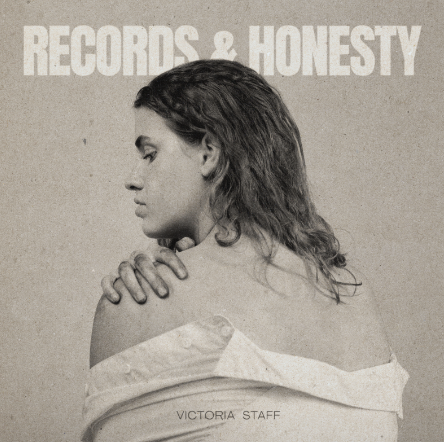
Victoria Staff Debuts“Here We Go Again” from the Records & Honesty EP

Victoria Staff writes music for the same reasons she runs and bakes and hangs out with friends and family – it makes her feel better. Like many people, she struggles with her mental health. Writing music has always supported that because it gave her a way to process complex emotions at a really young age. 

Some relationships are just inherently toxic and messy, but that’s the fun of them. There’s no logical reason for those two people to be together but you find yourself caught in a merry-go-round of stupid, repeating your same mistakes until you’re not even sure how you got there. That is what Victoria’s song “Here We Go Again” is all about.  

The five songs on the Records & Honesty EP were produced by Dan Hosh. It’s right there in the title – Victoria invites listeners to get to know her and hear about her honest life experiences over the past few years. 

Massachusetts-Based Singer-Songwriter Dan Pallotta Releases Empathetic Folk Song, “The Man That Fortune Forgot”

Following up on the release of “Winnebago Dreams,” Dan Pallotta’s escapist reflection on carefree summer road tripping, the artist is sharing his new single, “The Man That Fortune Forgot.”

Empathetic and humorous, the storytelling at the heart of this folk song reflects on the feelings of self-pity and victimhood that we all experience at one time or another. The song comes from his forthcoming album, Winnebago Dreams, out November 17th.

“I’m really careful about NEVER saying, “just my luck,” when something bad or annoying happens, because that shit becomes a self-fulfilling prophecy,” says Pallotta. “But you can’t help feeling it sometimes, even if you’re good about not verbalizing it.”

“The Man That Fortune Forgot” marks Pallotta’s second collaboration with Soozie Tyrell of E Street Band fame on fiddle and bassist Tony Garnier, music director for Bob Dylan.

Reflecting on the character at the centre of this song, Pallotta explains that “we all feel like we’re ‘the’ person — the only person that is forgotten — sometimes. And he feels trapped. He’s not committed to life being this way and he even tries the path of gratitude, but even that doesn’t work out for him.

So you end up having a lot of empathy for the poor bastard, which, of course, leads you to have a lot of empathy for yourself—that part of yourself that’s like him sometimes.”