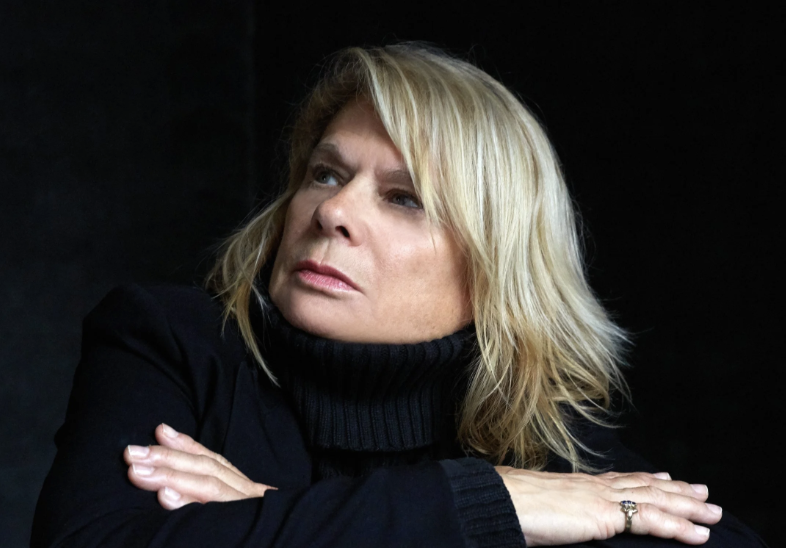
St. Catharines, Ontario-based artist Dre Dupuis unveils his intimate new single “Drift,” recorded entirely in his laundry room on a Tascam 488 tape machine. Homemade, melancholic, and soothing, the track is a testament to Dupuis’ DIY spirit, blending lo-fi indie rock with introspective melodies and warm, intricate harmonies.
“‘Drift’ was tracked entirely at home,” Dupuis explains. “I sampled and chopped some drums, recorded guitars and bass directly into the board, and ran vocals through a dynamic mic. Working within the tape machine’s limitations forced me to simplify, which actually freed me up creatively. After two weeks of overcomplicating things digitally, I went back to live mixdowns on tape and finished the mix in two evenings. Hell ya.”
The single exemplifies Dupuis’ hands-on approach to music-making, from recording to mixing, capturing a sound that is both intimate and timeless. Drawing from influences like The Strokes, Andy Shauf, and The Beach Boys, Dupuis layers punchy riffs, tender vocals, and textured instrumentation to create a world of personal reflection and quiet beauty.
Every chord and note in “Drift” comes from a place of patience, experimentation, and quiet observation – music crafted in the small, meaningful moments of everyday life.
Montreal singer-songwriter James Correa returns with his most personal work to date, Bonny Park – a contemplative, emotional, and heartfelt collection that dives into themes of family, memory, and the temporary nature of all things. The making of the album was a solitary pursuit where Correa wrote, performed, and produced the album entirely himself. That singular vision makes the record feel intimate and direct, yet expansive in its emotional weight.
“I wanted to see if I was capable of doing an album entirely by myself,” says Correa. “The most challenging aspect was producing my own performances – being honest in my editing, really listening to what I was doing. It was frustrating at times, but worth it.”
The album’s production approach is raw and human – Correa insisted on using real drums, recording upward of 20-30 takes per song to capture the right feel. Musically, his guiding principle was simple: What would Paul McCartney do? The result is a timeless sound that nods to classic songwriting while feeling fresh and deeply personal.
The lead single and title track sets the tone for the album – a ramble-shot stream of memories, both specific and elusive, stitched together with a chorus that unlocked the meaning of the song for Correa.
“There are only a handful of people who would understand the references in this song, and only I would understand them all. You can’t get more personal than that. Yet every time I sing it, it still feels totally relatable. Weird,” he says.
Italian composer Marco Di Stefano has been recognized for his ability to blend classical orchestration, folk influences and cinematic scoring into music that feels both epic and deeply human.
His latest project Far Inside takes this skill a step further, pairing his orchestral compositions with striking visual narratives.
The new video for “Tarantella Noire”, a track on the new album, brings together live recording footage from the European Recording Orchestra in Sofia with AI generated cinematic clips, creating a tension between reality and imagination.
Inspired by the events in Palermo in 1992, particularly the murders of judges Falcone and Borsellino, the video balances historical drama with a fictionalized narrative, exploring the shadowy underworld of organized crime through a visual lens.
We spoke with Di Stefano who walks us through the creative decisions behind the video, the process of blending orchestral performance with cinematic storytelling, and how he translated a pivotal moment in history into music and imagery.
1.Tell us the story of this song, why did you choose to visualize this song specifically in this way?
The track was conceived with a strong cinematic and narrative focus, designed to evoke clear imagery and guide the listener through a story. Consequently, the visualization could not be merely an accompaniment; it had to function as a genuine narrative support.
I chose to merge two core elements: authentic footage from the recording session, which lends credibility and showcases the artistic genesis of the piece, and cinematic clips generated via artificial intelligence.
2. What was the inspiration behind this new video (visuals, storyline etc.)?
The inspiration for both the song and the video is rooted in a fictional narrative set against the real historical context of the events in Palermo in 1992, specifically the dramatic escalation leading to the murders of judges Falcone and Borsellino, who symbolized the fight against organized crime.
For the video, I adopted a visual approach that balances documentary style with a cinematic feel. The majority of the footage features the studio recording session with the European Recording Orchestra in Sofia, which highlights the high production value and orchestral commitment. I integrated short, AI-generated clips depicting an old, abandoned house in the Sicilian mountains, envisioned as a criminal hideout. This duality creates a visual tension that mirrors the historical drama of the story.
3. What was the process of making the video?
The process was guided by the dual objective of maximizing the musical performance and enriching it with an evocative visual context. The primary phase involved the meticulous editing of the recording session footage, selecting and assembling the most effective and dynamic moments of the orchestral execution.
Following this, I made the decision to incorporate the AI-generated clips. This was not merely filler, but a deliberate choice to elevate the video’s atmosphere beyond a simple making-of. The integration of these cinematic elements allowed us to create a richer visual texture, providing an implicit narrative backdrop that supports the epic quality of the music and demonstrates my ability to curate detail and the overall mood of the final product.
Garrett Anthony Rice has a way of writing songs that feel like they were already waiting for you. His latest, “It’s Not The Summer,” steps out of the shadows with an easy glow, letting light in without rushing it. The track is touched by Britpop’s golden haze, but it’s no nostalgia trip. Crisp guitars ring out over a gentle, steady pulse; breezy rhythms carry the song forward with the same patience that runs through its core. There’s a quiet acceptance here that life doesn’t always meet you where you want it to, and that’s fine. Seasons change. Things shift. It won’t be like this forever. And in Ireland, where summer rain often drowns out the sunshine, that irony lands all the more sharply.
“It’s Not The Summer” sounds like sunshine caught in a jar. The song flickers with familiar ghosts, a breakdown with Lennon’s trace in it, handclaps that carry the spirit of “Here Comes the Sun,” and a whistle at the end that drifts the way Otis Redding once did on “Dock of the Bay.” Rather than imitation, these touches feel like memories folded into something new, lived-in, and wholly Rice’s own.
The single adds a softer hue to the unfolding Equinox, the 18-track double album recorded between Ireland and the UK in 2024. Following the gospel haze of “Eden,” the road-dust grit of “In the Sun,” the urgency of “I Found Myself Today,” and the introspective burn of “Property,” this one opens a window and lets warmth spill in. “It’s Not The Summer” doesn’t try to solve anything. It just offers what it has: patience, clarity, and the reminder that sometimes the best thing you can do is wait for the next season to come.
Since 2017, Zedge has made it easier for creators across the globe to make a living making art through its thriving Zedge Premium marketplace, paying out millions of dollars each year. With Tapedeck, Zedge is bringing that same creator-first model to music.
The service is the brainchild of Zedge’s SVP of Product and music industry veteran Tim Quirk, the lead singer of Too Much Joy and key figure in shaping the digital music landscape. Quirk was part of the team that launched Rhapsody in 2001, helped build Google Play in 2011, and later went on to found Freeform Development, a start-up Zedge acquired with the goal of enabling their global network of creators to better monetize their art.
Reflecting on the early days of streaming, Quirk emphasizes that fair artist compensation was once achievable. “When Rhapsody launched it set the standard at a penny per play, while, at FreeForm we knew there had to be more and we proved that superfans showed they’ll pay extra to support the artists they care about most. Zedge Premium furthered this by enabling a self-serve platform that put the artist in charge. TapeDeck’s goal is to prioritize fan passion over mass numbers of casual users ensuring that control over destiny stays exactly where it belongs – with the artist,” he says. Today, he remains acutely aware of the stark contrast, as modern royalty systems often leave artists earning mere fractions of a cent per stream from their labels.
How Tapedeck changes the game:
Artist-driven pricing: Licensors, whether individual artists, labels, or distributors, set their own prices for streaming, track downloads, and album purchases based on knowing their audience best. A penny per play is the minimum.
Revenue share: Tapedeck pays licensors 80% of revenue for each download and stream.
Optional fan contributions: Fans can also pay more than the listed price, creating an incremental revenue opportunity for the artists they love.
No subscription fees: Artists can participate without upfront costs, ensuring accessibility and scalability.
“We’re not aiming to compete with Spotify on day one,” Quirk adds. “We’re here to prove eager fans can support the artists they love in ways that aren’t available today.”
Tapedeck has partnered with Symphonic to launch a three-month pilot program in the United States, initially available on iOS. More licensors will be added continuously, and expansion to Android, web, and international markets is expected in 2026.
With Tapedeck, every play and purchase gives more support to the artists who create the music you love.
Tapedeck is a new digital music service from Zedge with a mission to make it easier for musicians to make a living making music. Its transparent, artist-first model allows licensors to set their own prices and ensures a penny-per-play minimum for streaming royalties, while giving fans the ability to directly support the artists they admire.
About Zedge
Zedge empowers tens of millions of consumers and creators each month with its suite of interconnected platforms that enable creativity, self-expression and e-commerce and foster community through fun competitions. Zedge’s ecosystem of product offerings includes the Zedge Marketplace, a freemium marketplace offering mobile phone wallpapers, video wallpapers, ringtones, notification sounds, and pAInt, a generative AI image maker; GuruShots, “The World’s Greatest Photography Game,” a skill-based photo challenge game; and Emojipedia, the #1 trusted source for ‘all things emoji.’
Self-described “genre-fluid” artist Jean Caffeine unveils her new album, Generation Jean, on the Austin-based Flak Records. Across its 10 tracks, Jean shows off her sharp wit and songwriting skills as the album slides between retro pop, Americana, punk-tinged blues, power pop, and art rock.
If there’s a theme that ties the album together its feels and moods: The exuberance and limerence of love on “Love What is it?,” the loneliness and isolation of “Another Crying Christmas,” the irritation and exasperation of “You’re Fine,” the sadness of “I Always Cry on Thursday.”
Side A delivers the earworms (“I Know You Know I Know,” “Love What is it?”), while Side B brings the bite with “Another Crying Christmas,” the PSA-with-teeth “Mammogram,” the catchy but irreverent “I Don’t Want to Kill You Anymore” and the edgy art rocker “You’re Fine.”
Just when you expect Jean to roll out another pop rock or punk pop ear worm, she surprises you with her attitudinal lead single, “You’re Fine,” which is like nothing else in her catalog.
“You’re Fine” mashes up new wave, no-wave and Art-rock. With a sparse low groove it conjures up early Talking Heads and Brian Eno and then takes a turn and sounds like it’d fit on a playlist with Lydia Lunch and Richard Hell and the Voidoids. Initially, minimalist and groove-based, the song mutates into a maximalist, Sparks-meets-Queen crescendo – all in protest of the phrase that irritates her the most, “You’re Fine.”
“So often ‘you’re fine’ is delivered with spectacular indifference by a barista or someone I’ve accidentally and clumsily bumped into,” Jean elaborates. “Even though they are saying, ‘you’re fine,’ it feels judgey and dismissive. When you say, ‘you’re fine,’ you are saying that someone is just adequate. Surely I am better (or worse) than adequate! This song is a (jokey) protest to all the ‘you’re fine-ing’ going on out there in the world.”
Recorded with longtime collaborator Lars Göransson (Sounds Outrageous Studio, Austin), the track brims with sonic Easter eggs – a banged frying pan, a mouth-made synth riff run through vocoder, a fake phone sound, wah-wah guitar, and a metal guitar riff that crashes in for the finale. Frequent co-conspirators Josh Robins (Invincible Czars), Jon Notarthomas, (Ian McGlagan, Rubilators) Shannon Rierson (Utley 3 and Flak Records head honcho), and drummer Zack Humphrey (Megafauna) all leave fingerprints on the song’s shapeshifting arrangement.
You must be logged in to post a comment.