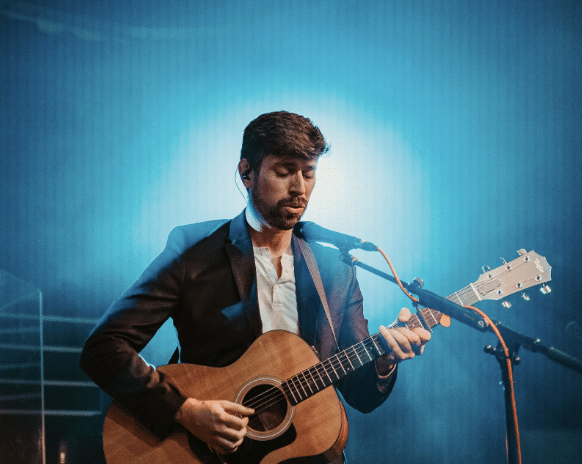
Haitian Canadian artist Tedy releases his highly anticipated debut album Scandalous. A bold, emotionally charged record that blurs the lines between pop, R&B, and alt-soul, Scandalous marks a defining moment in Tedy’s artistic evolution.
Known for his raw storytelling, soaring vocals, and genre-bending sound, Tedy is quickly molding himself into one of Canada’s most magnetic voices. With over 50 million global streams, one million TikTok followers, and 27 million likes, he’s built a fanbase drawn to his honesty and fearless creativity.
“Scandalous is about reclaiming the word,” Tedy says. “It’s about being unapologetically real. I’m calling my fans ‘Scandals’ because if being yourself makes you a scandal – be the biggest scandal, make headlines.”
From the viral, poignant anthem “Rich,” to the heart-wrenching ballad “I Hope,” and the unapologetic closer “Talk About Me,” Scandalous moves through vulnerability, ambition, and empowerment with cinematic flair. This body of work includes the talents of Dan Book (blink-182, Britney Spears) and Jesse Mason (Chance Peña, BLONDISH), Chris Lyon (The Chainsmokers, Rina Sawayama, Rebecca Black) and Rabbit (Stell, Johnny Orlando, Maeta).
At the heart of the album lies “Hurt My Feelings,” an aching yet tender reflection on unspoken love and the quiet acceptance of loss. Tedy captures the bittersweet beauty of wanting someone you can’t have, weaving emotional vulnerability with poetic restraint. Within the broader context of Scandalous, it stands as a defining moment: a surrender to imperfection and an embrace of emotional honesty that anchors the project as a whole.
Tedy is also expanding his creative prowess by putting a stamp on his songwriting ability, with recent credits for EJAE from K-Pop Demon Hunters on her newest single “In Another World.”
“If my earlier projects introduced me, Scandalous is about me peeling the layers of my inner self,” he shares. “I’m not hiding anymore. I’ve learned that what I thought were weaknesses are actually strengths. This is me, loud, emotional, and proud.”
The Scandalous era extends beyond music. Styled and designed largely by Tedy himself, the visuals fuse glam rock with high-drama pop – what he describes as “Elton John meets Prince, filtered through a Victorian pirate obsessed with glitter.”
The album is more than a body of work; it’s a declaration of selfhood.
“All my heroes were scandalous,” Tedy says. “Now it’s my turn.”
Ontario-based multi-instrumentalist and composer Dylan White makes his solo debut with Fronds – a lush, groove-driven EP that explores the repeating patterns of love and fear that shape human connection across lifetimes and generations. Rooted in jazz, soul, and funk, Fronds reflects both the intricate structure of nature and the resilient spirit of those who dare to break cycles of trauma and doubt.
“We’re surrounded by deep-rooted and mysterious patterns,” says White. “This album was inspired by those patterns – of both love and fear – that repeat themselves throughout a lifetime and across generations. As a nature boy, I’ve always been intrigued by the fact that repeating systems are the basis of all life.”
Across Fronds, White leans into the concept of iteration both musically and emotionally. Recorded across Guelph, Toronto, Haliburton, and Calgary, the EP captures a wide network of collaborators who helped shape its textured, communal sound. “I cashed in all the favours that I could,” he laughs. “All of the musicians on this record are players that I’ve performed with for years. Their backgrounds span acoustic singer-songwriter, funk, soul, jazz fusion and everything in between.”
The EP’s collaborative spirit shines brightest on “Rags,” the defiant, joyfully funky centrepiece. Built around a whole-tone descending bassline, the track dismantles the tired myth of “rags to riches” with sharp wit and a grin. “It’s a joyful attack on murky and vain clichés like ‘pulling yourself up by your bootstraps,’” says White. “It rejects the ridiculousness, conceit, and delusion that we (especially white guys like myself) succeed because we ‘earned it’ and thoroughly enjoys poking fun at that idea.” With its layered jazz harmonies, light-on-its-feet groove, and expressive performances from drummer Julian Psihogios and guitarist Anoop Isac, “Rags” balances playfulness with purpose. “Julian’s intense, blistering solo, paired with Anoop’s mysterious chords, really embodies that shift from humour to seriousness,” White says. “It’s cheeky, but it’s not cynical – it’s fundamentally optimistic.”
“Entropic Cycle” swirls into the room like a cold draft from a door you didn’t realize was open, bringing with it the uncanny feeling that something in the atmosphere just shifted.
ИΞOlicious, the 18 year old avant-pop experimenter from Glendale is already known for making music that feels like emotional weather, but this new single pushes that instinct into a sharper, stranger and much more focused form. This is the sound of someone willingly stepping into the mess and discovering something almost comforting inside the chaos.
Built on stacked panned violin recordings that bloom into something cosmic, the production moves like a breathing organism.
The track rises with star lit synths and falls into verses that feel raw enough to bruise, while airplane like textures buzz underneath as if the whole thing is in motion even when you’re still.
If there is a thesis to “Entropic Cycle,” it’s hidden in the contrast. In the push and pull, the optimism and dread, the night and the thin glow of the approaching morning. ИΞOlicious has created a pop track that behaves more like a dream or maybe a recurring thought you can’t shake.
What makes the song though, is its sincerity. For all the glitchy shimmer and lunar strangeness, there’s a core belief running through it: that everything matters. Even the parts that feel like static. Even the parts we wish we could fast forward through.
You can hear this philosophy in the way the track lifts, breaks and reforms itself – in the entropy and rebirth stitched together not as a contradiction but as the natural order of things. It’s the kind of music that feels like it was made at 3 a.m. not because the artist had to but because the night is the only time when these thoughts feel safe enough to surface.
“Entropic Cycle” is the opening chapter of the upcoming album LΞT IT BΞ ИIGHT, and ИΞOlicious is quietly setting the stage for something bigger – something conceptual, personal and defiantly experimental.
This isn’t just another debut single trying to get your attention. It’s a signal flare from a new, weird and wonderful corner of the underground.
Some albums arrive with the force of a revelation, yet their power is not found in grandiosity or spectacle. Instead it lives in the quiet permissions they give. Permission to pause. Permission to listen closely. Permission to acknowledge internal conflicts that daily life encourages us to overlook. Arlie’s Someone You Can Believe In is that kind of album. It invites the listener into a world where spiritual longing, relational fracture, and renewed creative intuition coexist in a single delicate fabric.
The record marks a significant turning point for Nathaniel Banks, the creative force behind Arlie. After years of navigating the churn of expectation and approval within the major label ecosystem, Banks returns to a space that feels unmistakably his own. The album takes shape within the intimacy of a restored bedroom studio. Familiar instruments return to his hands. The acoustic guitar. The sunburst Strat. The layered harmonies he once built alone in the quiet hours of night. These elements do not operate as nostalgia. Instead they function as anchors that reconnect him with the artistic instincts that first drew listeners into his orbit.
At its heart, Someone You Can Believe In is a concept record that unfolds through a series of narrative chapters. These scenes are fully produced and operate like fragments of an old radio play. They stitch the songs into a continuous emotional journey and give the album a sense of cinematic progression. The central tension within this story is the search for meaning at a time when clarity feels impossible. Banks examines the silence he perceives from the Divine, a silence that deepens the ache of human suffering, heartbreak, and uncertainty. The narrative structure amplifies this search by positioning each song as a response to unspoken questions.
One of the most compelling elements of the album is its willingness to blend humor with despair. This mix of tones mirrors the unpredictability of real emotional experience. A particularly striking moment occurs late in the record when a child repeats his father’s mistaken assumption about Arlie’s gender. The scene is both awkward and revealing. Instead of confronting the misunderstanding or responding with frustration, Arlie turns to music. He answers the tension with a gentle acoustic reprise. This response becomes one of the album’s most poignant gestures. It suggests that sometimes the only honest answer to pain is a return to the inner voice that survives beneath judgment and noise.
The song “is it okay if i love you” stands out as one of the album’s purest offerings. Banks wrote it during a period of emotional urgency after newly replacing a stolen laptop. The creative break forced him into a more tactile form of writing. He spent months with guitar and keyboard, writing lyrics by hand. When he resumed digital recording he did so with limited resources and intense focus. The track took shape quickly and originated as a personal gesture of affection. Even without knowing that background the song carries a vulnerability and melodic grace that feels immediate and sincere.
Throughout the record Banks leans into Biblical imagery. He uses this language not as religious instruction but as a method of expressing longing, confusion, and yearning for direction. It is rare to encounter such earnest spiritual vocabulary within the indie landscape. Here it feels organic. It becomes a means of articulating questions that do not offer easy answers.
What makes Someone You Can Believe In particularly resonant is its insistence that music can still function as a vessel for deep emotional and spiritual inquiry. In a culture that prioritizes quick consumption, Banks creates a work that rewards patience and careful attention. The record challenges listeners to slow down, follow its narrative arcs, and allow its quiet revelations to take root.
Arlie emerges from this project not as an artist chasing relevance but as one who has rediscovered the courage to trust his own voice. The result is an album of rare sincerity and depth, one that feels destined to linger in the lives of those who spend time with it. If the title suggests a search for someone trustworthy, the music itself becomes evidence that the journey inward is often the most faithful guide.
Italian singer songwriter Daniele Odasso has always moved through music with a rare blend of emotional honesty and refined musicanship.
His new single, “Living in Between,” marks a turning point for Daniele, shaped by a period of deep personal transformation and a return to the landscapes of Tuscany that have long anchored his sense of self. Recorded in Viareggio and brought to life through an intimate collaboration with producer Amira, the song drifts between electronic pulse and soulful warmth, mirroring the emotional space it was born from.
What makes this moment in Daniele’s career so compelling is the clarity with which he speaks about the connection between voice, body and environment. Water, reflection, memory and nature all play a role in the sound and visuals of “Living in Between,” forming a world where music becomes a form of inner exploration.
The accompanying video, shot between underwater frames, pine forests and the glowing dunes of Lecciona doesn’t just illustrate the song. It lives and breathes with it.
We sat down with Daniele to talk about the making of “Living in Between,” the sensory world behind his vocal work, the unexpected joy of shooting underwater and how returning to Tuscany helped him rediscover the path forward.
1. Tell us the story of this song, why did you choose to visualize this song specifically in this way?
“Living in Between” was recorded while I was living in Viareggio, Tuscany—a place that carries deep meaning for me because of my mother’s family roots there. During that period, I reconnected with nature in a way that shaped the entire sound of the song: the pulsating electronic groove, the layered vocals, and the fluid movement of the electric guitar all echo that sense of being suspended between states.
Water became a central metaphor throughout the making of the record. Living so close to the sea in Tuscany deeply influenced the emotional atmosphere of the track, and it was something I asked Amira to keep in mind while producing the record—this idea of fluidity, immersion, and constant movement between light and shadow.
That’s why the visual concept also begins with water as a symbolic entry point. It represents the emotional space from which the song emerged: a place of introspection, depth, and transformation. As the video shifts into the landscape of pine trees and dunes in Viareggio, it mirrors the song’s inner journey—from being enveloped by the element of water to resurfacing in the brightness of the natural world that inspired the music.
2. What was the inspiration behind this new video (visuals, storyline, etc.)?
The visuals were inspired by my daily proximity to water in Viareggio and the sensory relationship I developed with it through swimming every day. Because my vocal research is rooted in the Lichtenberger method, which focuses on acoustic perception and proprioception, being immersed in such a fluid medium gave me a new way of experiencing sound in my body. That liquid, tactile connection to water deeply influenced how I approached singing on this record, and Amira’s production supported and expanded that direction.
I wanted the video to reflect this whole sensory world, so I created an initial storyboard centered on an immersive water state and shared it with director Francesco Quadrelli. After exploring underwater imagery with photographer William Petriccioli and scouting the dunes of Viareggio together, the visual arc became clear: starting within the layered reflections and depth of water, gradually moving toward the sunlight near the beach, and ultimately returning to the sea. The visuals mirror the full cycle that shaped the music—nature, body, voice, and sound flowing back into one another.
3. What was the process of making the video?
The process of making the video was truly one of the best experiences I’ve ever had. I first met the incredibly talented art director William Petriccioli, who also shot the cover and instantly grasped the imagery and intentions behind the project. Shortly after, I met Francesco Quadrelli, a visionary and evocative director who immediately understood the concept and the different technical possibilities for shooting underwater. His visual language aligned perfectly with what I had envisioned and pushed the concept even further.
Shooting the underwater scenes was unexpectedly fun. I had trained myself to move from different directions while keeping my eyes open and staying in constant dialogue with Francesco’s camera. That allowed us to play with the surface of the water from multiple angles, creating those mirrored layers of light that shift with my movements.
We then moved to the “outside world.” The first scenes were filmed in my grandmother’s house in Tuscany—a room I literally grew up in—before heading to the pine forest near the beach of Lecciona in Viareggio. That location has an extraordinary sunset between the dunes and the water, and it became the perfect place to let go and immerse myself at the end of the day.
William and Francesco are an extraordinary team, and because they’re close friends, their trust and synergy made me feel completely embraced and understood throughout the shoot. We filmed in the exact order of the narrative, starting with the morning water scenes and ending with the sunset and my return to the sea. Experiencing that progression in real time felt both powerful and deeply cathartic.
Toronto pop-rock singer-songwriter Jenny Palacios returns with “IYKYK,” an honest, nostalgic, and playfully self-deprecating anthem for anyone who’s grown up without ever truly “growing into” themselves. Packed with 2000s rock-ballad guitar tones, wry humour, and the soft ache of arrested development, “IYKYK” is an ode to the awkward kids who turned into equally awkward adults – the ones who never quite figured out the script everyone else seems to know by heart.
“I’ve always wanted to write a song called ‘IYKYK‘ — I just really like the phrase, but funny enough, this song didn’t start with that in mind,” says Palacios. “I had written a lot of lines about constantly feeling so awkward and out of place – just stuff that you’re kind of meant to figure out before you’re a grown adult. I’m always in places where everyone else knows exactly what to say or do next. I started asking myself, ‘Is this a unique experience?’ I knew I couldn’t be the only one with this kind of arrested development, so ‘IYKYK‘ felt fitting. It’s like a plea to the weird kids who are now weird adults.”
1. Tell us the story of this song, why did you choose to visualize this song specifically?
I had many, many directions as time went on with IYKYK. Initially, even before I brought it to the studio, the demo for it was a lot slower in tempo, and some of those riffs at that bpm I found it gave like, Perks of Being a Wallflower, school dance scene, 80’s slow dancing, maybe no one’s asking you. Later as the song became more developed, I thought it’d be fun as a training montage. I really liked an underdog story for it, so I was thinking maybe it’s my band and I starting out as the losing bet for an upcoming fight or something, and at the end maybe it’s my big fight and the climax is that I actually lose it. Eventually, I think I just decided I thought this song deserves the full band, in everyday spaces, where one might expect to act business as usual, so we went with Sam’s (Samuel Mejia, Drummer) kitchen, which feels a little cramped, a little home-y, it’s not show-y or perfect by any means, which felt just so right. Thomas, Sam’s roommate, walked in at some point and we thought it was just so perfect and like the touch of awkwardness that we needed, so it’s in the final cut. The other half of the music video, I really wanted this feeling of loneliness, which kind of shows the other side of feeling alone in a crowded room or the odd one out and nothing like a huge empty park to get the feeling of being alone across.
2.What was the inspiration behind this video (visuals, storyline, etc.)?
There were really specific angles I wanted for the band shots that I collected and sent to Matt (Matt Guarrasi, NAKEDBURN), my friend and director of photography. A lot of the references were from videos like, Good Charlotte’s Unpredictable, Pale Waves Television Romance, The Aces’ Girls Make Me Wanna Die, Green Day’s Redundant, The 1975 You & Me Together Song and more. We kept pretty close to this deck I made, describing look and feel. To pull from it directly, I wrote:
The video is built around emotional vignettes and less a clear story.
“IYKYK” is about feeling like you’re late to every version of yourself. Late to confidence, conviction, femininity, certainty and being observational of who you actually are and ultimately, the comfort in admitting it.
The video explores the awkward adulthood of being both aware and lost, of wanting to be cool and composed but constantly tripping over your own humanness. Key emotions: restless, bare, self-deprecating, awkward, honest. Visual shorthand: a life and movement that looks fine, but feels slightly off.
The video loops between detached performance and quiet observation.
3.What was the process of making this video?
I’m really lucky to have the talented friends I do, it’s pretty easy to call Matt up on the drop of a dime and put together a quick game plan in a burst of inspiration. This time around, I had started the art direction deck I mentioned to really get specific and sent it to him. As far as shooting goes, we met up one night and got the park shots, Rob (Rob Licandro, Guitarist) on lighting which was key. Everyone was a little busy so we couldn’t really get together to rehearse, but luckily Sam and I squeezed a quick drum rehearsal in and a week later when the rest of the band was free, we got the shots at Sam’s place. Deck open on my iPad to reference haha. We got a little nervous about the sound, getting drums in a tiny Toronto kitchen, where your neighbours can probably hear and feel everything you do. It got a little freaky since it was so loud but we wrapped up pretty quick.
For the edit, Matt sent me all the footage and I kind of lived with it for a week. Once I had the video where I wanted it, I sent it back to Matt for colour and in a day or two the final product was up on Youtube and out in the world!
The way I work, I feel like I definitely always just set a deadline and like, figure it out. This time, the video was finished and uploaded within like 3 hours of the release date, it was a close one!