The Beatroot Road Embarks on a Bold Cross-Cultural Musical Expedition with “Morbid Love”

If you’re ready to experience something truly different in music, The Beatroot Road might just be your new favorite. This alternative world music duo, led by producer Mark Russell and fiddler Hazel Fairbairn, has been quietly crafting an adventurous sound that blends cultures, genres, and decades into a fresh, fearless mix. Their latest single, “Morbid Love,” which dropped on March 13th, is a perfect example of their boundary-pushing approach.

The Beatroot Road is not your average band. They don’t just stick to one style or geography—they actively mix it all up. Mark and Hazel collaborate with musicians from all corners of the globe—Austria, Nigeria, Venezuela, Korea, and beyond—creating a global collective where cultural influences collide and spark new ideas. What you get is music that feels like a deep conversation between traditions, an eclectic fusion that doesn’t just pay homage but redefines the sound altogether.

“Morbid Love” is a sonic rollercoaster. It mixes punk energy, rockabilly swagger, soulful grit, and classic rock n’ roll — all ramped up to full throttle. The song tells the story of a woman caught in a self-destructive emotional storm, a raw and intense narrative that matches the frenetic pace of the music. There’s a real sense of urgency and fire that makes it impossible to sit still while listening.

What makes this track even more fascinating is its history. It’s been recorded over four decades, pieced together from sessions in the ’80s, ’90s, and finally completed in 2022. You hear guitar by Richard ‘Titch’ English, motorcycle cog sounds from Harvey B., drums from Mark himself, and guest vocals by Nashville’s Katie Burke that bring an extra edge. The bassline, originally written decades ago but only recorded recently by Mark, ties it all together with a timeless groove. Hazel’s fiddle and keyboard parts add layers that feel both ancient and modern at the same time.

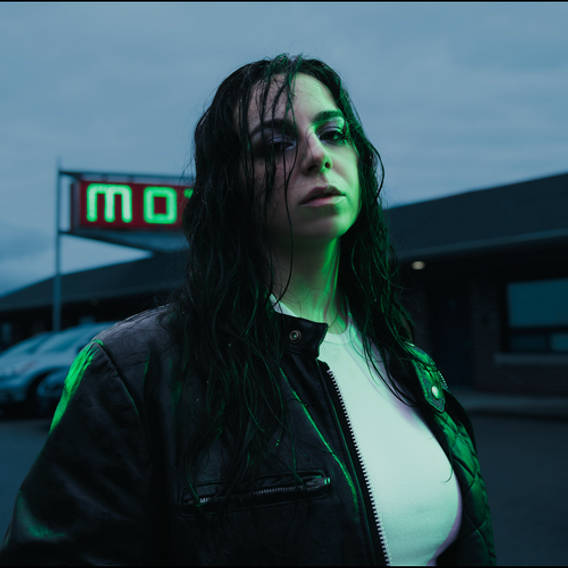
The video, directed by Vancouver filmmaker Atsu Kanno and featuring actors Yoonie Kim and Monica Pop, adds another dimension. It visually captures the raw, gritty spirit of the song while staying rooted in the urban landscape of Vancouver, tying the music back to a real place and time.

This single is part of a bigger story. The Beatroot Road is releasing new music every six weeks starting from last October and gearing up for a full album in spring 2025. It’s a project that’s been brewing since lockdown in a studio on a mountain near Vancouver, where Mark and Hazel began experimenting with combining “wrong” instruments and styles with the right intention to make music that defies conventions and genre limits.

Mark’s musical journey is as global as the music itself. Growing up between Sudan and Scotland, learning drum styles from African, Caribbean, and Celtic traditions, touring with eclectic bands, and sharing stages with legendary artists—his life experiences pour into every beat and rhythm. Hazel, with her background in classical and Celtic fiddle, plus a pioneering PhD on Irish pub music and studies under a South Indian violin master, brings a rich and experimental edge to the mix.

Together with their growing international group of collaborators, The Beatroot Road is building a truly unique sound. This is music made for dancing, but also for thinking and feeling. It’s music born of passion, curiosity, and respect for the many cultures it draws from.

If you’re tired of cookie-cutter music and craving something alive, unpredictable, and deeply human, “Morbid Love” is a fantastic place to start. It’s a bold statement from a project that’s only getting started and promises to take listeners on a rich, cultural adventure for years to come.

Why Frank Sintich’s “Hasn’t Stopped Raining Yet” Is the Rock Song We Didn’t Know We Needed

Frank Sintich is one of those rare artists who manages to blend heartfelt storytelling with raw musical talent in a way that feels both timeless and deeply personal. His latest single, “Hasn’t Stopped Raining Yet,” immediately hits you with a powerful emotional charge. From the first strum of the jangly, distorted guitars to the steady, primal beat driving the rhythm, this song carries weight beyond its sound. Frank’s voice cuts through the mix with sincerity, delivering lyrics that touch on universal struggles and the resilience of the human spirit.

The song’s themes center around perseverance and hope despite ongoing hardship. Frank wrote it after the tragic events that unfolded in New Orleans on New Year’s Eve. With close friends living in the French Quarter and a deep personal connection to the city, Frank felt compelled to write something that reflected the sorrow and violence while still holding on to the possibility of emerging from the darkness stronger than before. His lyrics work like a metaphor for that unending storm, one that tests us but doesn’t have the final say.

Musically, Frank draws from an impressive palette of influences. You can hear echoes of classic and modern rock legends like The Beatles, Bruce Springsteen, Tom Petty, and Tom Waits. His versatility as a songwriter and musician shines through in the way he balances gritty rock sounds with lyrical depth and melodic finesse. It’s a style that feels honest and lived-in, a product of years honing his craft in Chicago’s vibrant live music scene.

Over the years, Frank has been part of notable local bands such as C’mon, C’mon, Chaser, and The Hat Guys, building a solid reputation as a dedicated and skilled musician. Since going solo in 2020, he has steadily released a collection of songs that showcase his poetic approach to rock music, combining hard-earned wisdom with moments of transcendence and psychedelia. By May 2024, he had already written, recorded, and produced over 30 songs that can be found across all major streaming platforms.

Beyond his solo work, Frank is currently expanding his creative horizons by writing music for an upcoming musical titled The Weatherman, which is in pre-production. This new venture shows his willingness to explore new storytelling formats while staying true to his musical roots.

Frank’s guitar work deserves a special mention. Drawing inspiration from legends like Alex Lifeson, Steve Howe, Eric Clapton, Allan Holdsworth, and Michael Schenker, his playing is both expressive and technically impressive. Each note and riff carries emotional weight, telling stories of life’s challenges and victories alongside his lyrics.

Offstage, Frank is a family man, proud father, and grandfather. His life experience informs his music, making it feel authentic and relatable to listeners who have faced their own storms and come out stronger.

If you haven’t yet discovered Frank Sintich’s music, “Hasn’t Stopped Raining Yet” is an excellent place to start. You can find his entire catalog on all streaming platforms, and for those wanting to keep up with his journey, he stays active on Facebook and Instagram.

Frank Sintich’s music reminds us all that even when it feels like the rain won’t stop, there is strength in enduring, and hope in the possibility of a brighter day.

The Music Hunter Benson Was Born to Make

Some people write songs. Others live them first.

Hunter Benson is one of those rare artists whose music doesn’t just tell a story—it is the story. When you listen to one of his tracks, it’s not background noise or an easy playlist filler. It grabs you by the collar, sits you down, and says, “Let me tell you something real.”

But let’s rewind. Before the releases, the studio time, and the growing fanbase, there was a moment that split Hunter’s life in two. When he was just three years old, he and his father were struck by lightning. Tragically, his father didn’t survive. And while it’s hard to imagine anyone walking away from something like that, Hunter didn’t just survive it. He built a life of meaning around it.

His latest release, “Heaven’s Letter”, might be the most honest and vulnerable piece of music I’ve heard in a while. Released this past February, the song feels like a message in a bottle. It’s written not just about grief, but directly to it. It’s a slow-burning ballad that sits in your chest long after the last note fades. It carries all the weight of a child’s loss wrapped in the voice of a grown man still making sense of it. It’s not just a tribute to his father. It’s a moment of catharsis. The kind of song that makes you stop and check in with your own heart.

And what a voice to deliver it with. Hunter’s got that kind of voice that’s hard to describe but easy to recognize. A mix of gravel and gold. You might hear echoes of Chris Stapleton, Joe Cocker, maybe even a little Mark Lanegan, but it’s unmistakably his. It’s not perfect in the way auto-tune is perfect. It’s better than that. It’s human.

Before “Heaven’s Letter,” Benson gave us “Come and Gone” in October 2024 and “Seeking” in December. Two tracks that help round out the world he’s building. “Come and Gone” is a smoky, mournful country rock ballad that wrestles with impermanence. The people we lose. The time that slips past. The moments that haunt us. “Seeking,” on the other hand, leans into grit and resilience. It’s got more punch to it, more fire. There’s defiance in the chords and lyrics, but also that same undercurrent of searching. A theme that seems to define much of Hunter’s work.

What’s really interesting about his music is how it blends influences you wouldn’t always expect to hear together. He talks about being shaped by Alice in Chains and Mark Lanegan alongside Lynyrd Skynyrd and the dusty storytelling of Southern rock. Somehow, he pulls those threads together and weaves them into something that feels at once vintage and completely new. There’s grunge in the guitar tones. Twang in the melodies. And a whole lot of soul in the delivery.

When you meet Hunter—or even just listen to him speak—you realize pretty quickly that the guy towering over a mic with this heavy backstory is one of the most grounded, kind, and thoughtful people you’ll ever come across. He’s not trying to be a brand. He’s trying to be honest. That’s his whole thing. And it works.

With three singles out and an EP coming in late 2025, Benson is building something that feels bigger than just music. He’s carving space for real stories. His and yours and mine. Stories about what it means to lose someone and still find a way to move forward. About holding pain and hope in the same hand. About learning to live with the storm even after the lightning hits.

It’s not polished pop. It’s not manufactured sadness. It’s just one man who’s lived through hell and found a way to make something beautiful out of it. And honestly, that’s the kind of music the world needs more of.

Video Voyageur: 3Qs with Ariana Fig

Ariana Fig taps into the melancholic, dreamy, and nostalgic moods of modern online connection with her latest single, “Weather App.” Written about the strange intimacy of checking in on someone through a weather app, the song blurs the lines between self-validation and unhealthy attachment. Fig, a singer-songwriter from Hamilton, Ontario, channels her classical training into a genre-blending sound that’s both vulnerable and inventive.

Written during her first co-writing session with Emma Whale at the iconic Catherine North Studios, “Weather App” took shape on a rainy August evening. She worked with Sarah MacDougall, a long time collaborator of Fig‘s, who did the production and mixing on the track. Chris Wong later added guitar and bass tracks, helping to bring the emotional landscape of the song to life. Fig also layered her own violin playing into the track’s powerful bridge – a section she crafted to capture the heart-sinking realization that neither the narrator nor the subject of their affection will ever truly change.

1Tell us the story of this song, why did you choose to visualize this song specifically? 

I wrote this song from the perspective of online connection going too far. It’s about following someone’s every move by tracking their city via your weather app. I chose to make a music video for this song to really showcase the first few lines of the song “I added your city to my weather app, so I know to call when it rains”. The video highlights different locations within my hometown, and it plays up the role of an online stalker taking it a bit too far. 

2.What was the inspiration behind this video (visuals, storyline, etc.)? 

The inspiration behind this video was to showcase the downtown core of Hamilton and really make the viewer understand that the protagonist in this song would do anything to know what is going on in this person’s life. Even going to their city and visiting locations they know this person would go to. We filmed outside this motel to show the lengths this person would go to in order to learn more about the person they’re interested in. The storyline showcases me going to The Brain (a bar), running through a parking garage, outside on a walkway, and at the motel. All these locations signify tracking someone and bordering the lines between love and stalking. 

3.What was the process of making this video?

The process of making this video took some planning on my end and my director, Jamie Bouwman. We knew that we wanted it to feel authentic and like the viewer was with us, which is why a good majority of the video was filmed handheld. The video follows my footsteps, a key theme in the song. It was a very small team, just myself, my director, photographer and friend who acted as an assistant. It was very D.I.Y which speaks to my work as an independent artist.

Video Voyageur: 3Qs with Elisa Thorn

Vancouver-based harpist, vocalist, and composer Elisa Thorn shares her latest single, “The Garden,” a gentle, nostalgic, and experimental folk track that reflects on memory, grief, and the inner landscape of the self across time.

Inspired by a long-form sound collage Thorn created in 2021 called The Years In Between, “The Garden” explores the idea that all versions of ourselves – past, present, and future – exist within us simultaneously. Through this sonic meditation, Thorn invites listeners to reflect on the idea of traveling across time to nurture the inner child, commune with our ancestors, or simply sit with the stillness of self-discovery.

The song’s title references a deeply personal moment: a final conversation between Thorn and her grandmother. As her grandmother lay on her deathbed, she whispered, “Don’t worry darling, I found the secret garden.” That phrase, and the spiritual peace it implied, became the heart of the song – a place that transcends time and holds space for healing.

The Garden” was co-produced with David Vertesi, who contributed bass and helped shape the track’s ethereal atmosphere. Everything beyond the vocals and bass comes from the harp itself, transformed through creative sound design to stretch the instrument’s possibilities into dreamy, ambient textures. One of the track’s standout moments is the delayed harp line that closes the song; it’s one of Thorn‘s favourite parts to play live.

1. Tell us the story of this song, why did you choose to visualize this song specifically? 
The Garden refers to something my grandmother said to me on her deathbed, I was snuggling her in bed and started to cry because we knew she didn’t have much time left, and she told me “don’t worry darling, I found the secret garden.” I like to imagine it’s the spiritual place we all have access to that transcends time – we can access our lost loved ones, or ourselves in any moment. It’s a place I have return to a lot to offer care to my child self, or to look to the past or future for answers.The imagery of the willow tree is very important to this song – it is a place I imagined for my child-self to go when she needed to seek refuge from the outside world. It is an image that comes up alot in my dream – I often say “meet you by the willow tree” instead of “sweet dreams” to loved ones. 

2. What was the inspiration behind this video (visuals, storyline, etc.)? 
Because of this, it was very easy to come up with a concept for the video – I knew that I wanted to place the visuals for this song somewhere just like described in the song – a willow tree next to a body of water. I chose to keep it very simple, as the song is also the most simple one from the forthcoming album – just me, the harp and bass, and the willow tree. I think it’s bold (perhaps risky) to make a video so simple in this age of the 3-second attention span, but this song intends to be meditative, still and peaceful, so I wanted to honour that with the video.

3. What was the process of making this video?
The main thing was to find the right location! Luckily in Vancouver we have many beautiful places to choose from, and my videographer suggested this spot we chose at a park I have never been to in South Vancouver. It was perfect! The whole thing had to come together VERY quickly because I was out of town until about a week before the song was coming out, so we had to film and edit on a super tight timeline. Luckily the videographer, Kuba Wiatrak, is an angel – and spent a few late nights working with me to get the edit done right.

Folk Artist Joshua Joyce Comes Alive with Debut LP, “A Tender & Violent Nature,” with New Single “High Tide”

Toronto-based singer-songwriter Joshua Joyce has released his debut album, A Tender & Violent Nature – a collection of poetic, melancholic, and soul-searching folk songs exploring the tension between past and present, tenderness and turmoil. Anchored by the stirring focus track “High Tide,” Joyce’s first full-length effort marries literate songwriting with sparse, cinematic arrangements.

From the dusty edges of Americana to the windswept intimacy of alt-country, A Tender & Violent Nature explores the uneasy dualities that define us. “It’s a record about provenance, about forgiveness, about making peace with what and where you come from,” Joyce explains. “Sand and gravel, so to speak.”

Written during a particularly introspective period in 2024, “High Tide” was the very first song penned for the album, and laid the thematic groundwork for what would follow. “In the interest of keeping things fun and sexy, I had a few months where I’d been thinking quite a lot about dying,” Joyce says with a wry smile. “‘High Tide’ is what fell out of those inquiries.”

The song balances lonesome lyricism with warm fiddle lines performed by Ellen Daly, resulting in what Joyce describes as “the feeling of getting very bad news while looking at a rather pretty sunset.” Producer Rylan Smirlies helped shape the track’s sparse, atmospheric arrangement – allowing space for acoustic guitar, humming chorus vocals, and Daly’s fiddle to create emotional resonance without overproduction.