Ian North, the celebrated Canadian folk-rock artist, returns with a fresh and buoyant instrumental single, “Malahat.” Named after the scenic highway on Vancouver Island, this driving track captures the spirit of adventure and the joy of the open road. The instrumental piece is a celebration of both the beauty of the Malahat drive and the personal journey that led to its creation.
Produced by Chris Gartner, “Malahat” takes listeners on a sonic journey that moves between soaring crescendos and subtle, intimate moments. With intricate finger-style guitar, the track builds in intensity before returning to a quiet yet reflective finish, capturing the unique ebb and flow of the Malahat highway itself.
The song’s title holds personal significance for North, whose family has deep roots in British Columbia. He explains, “The Malahat is the highway that runs down the east coast of Vancouver Island from Nanaimo to Victoria. I’ve driven it many times, and the cover image of the song is a photo I took of my daughter walking along a wall at a lookout on that very highway.”
North continues, “I wanted to develop the song beyond a simple acoustic guitar piece, and working with Chris Gartner helped me achieve that. We worked together to create a sound that matches the scenic beauty of the Malahat with energy and motion.”
Canadian singer-songwriter Ian James Bain, a core member of Nicolette & the Nobodies and guitar player for Jeremie Albino, unveils his latest single, “Come & Gone,” a heartfelt country anthem that reflects on the struggle of trying to make a career in music while grappling with self-doubt, burnout, and the pull of nostalgia. A deeply personal track, “Come & Gone” paints a vivid picture of the uphill battle faced by independent artists, balancing romanticized dreams with the harsh realities of life on the road.
Rooted in classic country storytelling but infused with Bain’s distinctive modern edge, “Come & Gone” blends traditional form with unexpected chord changes, creating a sound that is both timeless and fresh. Lush pedal steel and twangy guitars carry Bain’s introspective lyrics, culminating in a song that feels both melancholic and reaffirming.
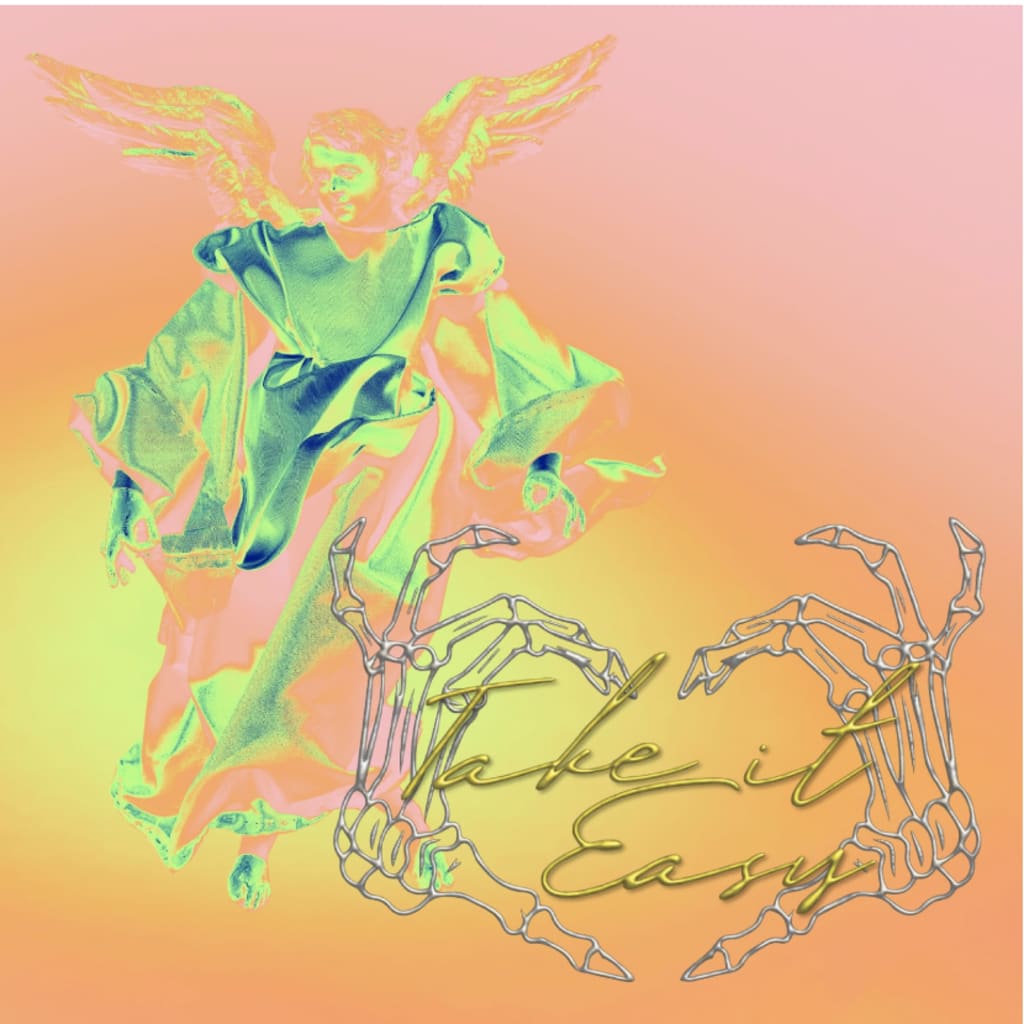
Total Fucking Darkness emerges from the abyss once more with “Take It Easy”—a pulsing rave anthem that invites listeners to dance and despair in equal measure.
The irony of the song’s title is no accident. “Take It Easy” drips with absurdity, wielding its platitudinous phrase as a sardonic weapon against the chaos. As the world burns, Total Fucking Darkness stands at the edge, grinning.
Written in real-time, “Take It Easy” was born from pure spite. Torquil Campbell (a man who once played a badger in a cartoon)wrote the lyrics while listening to the track for the first time—a feat that continues to baffle even his bandmates, Stephen Ramsay (tall and just on this side of handsome) and Tom McFall (English studio genius and synthesist whose engineering credits include the likes of REM, Bloc Party, Twin Shadow, Regina Spektor). And then, of course, there are the sheep.
There are sheep involved in the track. It’s not the first song I’ve heard with sheep in it this year. If you think about it, songs with sheep in them are an incredibly good sign, because there’s never been a bad song that mentions, or actually features, sheep. Think about it. – Stephen Ramsay
With Ghost Notes, Preacher Boy delivers a powerful, expansive record that draws from the raw emotional wellspring of country blues, the poetic sensibilities of American folk, and the experimental edge of alt-Americana. This 18-track album isn’t simply a return—it’s a career-defining statement, executed with clarity, confidence, and a deep reverence for the storytelling traditions that inform his work.
From the first track, Ghost Notes strikes with purpose. The arrangements are stark yet evocative, with slide guitar, gravel-toned vocals, and minimalist percussion forming the backbone of a sonic landscape that feels both rooted and restless. The instrumentation is never excessive; instead, it’s sculpted—crafted to serve the song rather than distract from it. Each note feels lived in, each lyric a fragment from a longer, untold story.
Preacher Boy has long operated at the intersection of form and innovation. While his work is unmistakably grounded in the blues, Ghost Notes stretches the genre’s boundaries. Songs like “New Red Cedar Blues” and “Chop Wood, Carry Water” are rhythmically assertive, marked by subtle shifts in phrasing and structure that keep the listener just off balance. Meanwhile, tracks such as “Light a Candle” and “Slow Crossing” lean into a more meditative space, allowing silence and restraint to speak as loudly as any chord.
Lyrically, the album is deeply introspective. Preacher Boy’s writing is mature and unflinching, weaving together themes of disillusionment, longing, endurance, and spiritual questioning. These are songs born from experience, not imitation. The narratives are fragmented and nonlinear—less traditional storytelling and more impressionistic sketches of a life shaped by movement and friction.
Perhaps what’s most striking about Ghost Notes is its refusal to conform. The album’s structure resists commercial formatting, its sound remains unpolished in all the right ways, and its thematic ambitions are unafraid to dwell in ambiguity. Tracks like “Don’t Know What to Think Anymore” and “Scene of the Crime” occupy a space between confession and confrontation. There’s no resolution, only a deepening inquiry.
This sense of defiance is reinforced by the production choices. The record sounds warm, but not overly refined—capturing the grit and grain of analog textures and acoustic imperfections. Vocals sit close to the ear, guitar strings rattle, room tone lingers. It’s an intimate listening experience that feels closer to a live performance than a studio product, as if the songs were captured in the moment rather than meticulously assembled.
As a body of work, Ghost Notes balances cohesiveness with breadth. Despite the number of tracks, the album never feels bloated. Each song adds something new to the emotional arc, whether it’s the swagger of “Bounce,” the elegiac mood of “No Rivers to Cross,” or the simmering tension in “Dashboard Dial.” This is a record that invites repeated listening—each return revealing a deeper texture, a missed detail, a previously buried truth.
In a musical landscape often dominated by trends and algorithms, Ghost Notes stands apart. It’s an album guided not by marketability, but by personal urgency and artistic integrity. Preacher Boy continues to push against the boundaries of what blues and Americana can be, without ever losing sight of where it all began. This isn’t just a career milestone—it’s a portrait of an artist still evolving, still questioning, and still carving his own path through the noise.
George Collins doesn’t just wear his influences on his sleeve. He very much channels them like a man with something urgent to get off his chest.
His new single “New Way” is a blistering, hook-heavy declaration of discontent and renewal. It opens with a fuzz-drenched guitar riff that’s instantly memorable.
Collins, who is a Washington D.C. born, Prague-based singer-songwriter with an unconventional path to music, knows how to get to the point. And in “New Way” the point is clear. Essentially, the world is a mess both culturally, politically, spiritually, and the time to shake things up has arrived.
It’s time for a new way – ’cause I know that something’s wrong
It’s time for a new way – it’s been going on too long
Tired of waiting. No more hesitating. Future’s unwritten – not set in stone.
What gives the track its bite though is not so much the urgency of its message, but the way it blends grit with melody. Anchored with tight drums and layered vocals that recall the energy of an early Costello, the tension of “The Rising” era Springsteen, and the swing for the rafters bravado of classic Stones. But it is all filtered through Collins’ own lens – that of a man who has spent decades in high finance before returning to music with a fresh dynamic and perspective and zero interest in any pretense.
Collins says:
The tune was indirectly inspired by Stanley Kubrick’s classic dystopian film, “A Clockwork Orange.”
Early in the movie, Georgie (no relation!) attempts to wrest control of the ultra-violent gang of Droogs led by Alex (played by Malcolm MacDowell), telling him repeatedly that “It’s part of the new way.”
This line has always stuck with me, and ever since my student days, whenever I decided it was time to turn over a new leaf and start afresh, I would tell myself (in my best Droogie accent), “It’s part of the new way!”
With this phrase in mind, I set out to write the song last year, based on my views of the current scene and a killer guitar riff that had been kicking around in my head for years.
The song starts out dark and uncertain but finishes on an optimistic and hopeful note with a positive message I hope will resonate far and wide.
Lyrically, “New Way” doesn’t overreach with metaphors — instead, it speaks plainly and directly, like a letter from someone who’s been watching the chaos unfold for years and is finally ready to shout over the noise. There’s frustration, yes, but also a glimmer of optimism and a belief that change is still possible if we’re willing to meet it halfway.
One of the more intriguing inspirations behind the song comes from Stanley Kubrick’s 1970’s film “A Clockwork Orange“. Musically and thematically, “New Way” does indeed set the tone for Collins’s upcoming album entitled “New Ways of Getting Old”, a collection which he has described as his very own attempt at a sprawling, genre spanning work à la Revolver or The White Album.
And “New Way” also proves that you do not need to be young to raise your voice – you just need to have something to say. Lucky for us, George Collins has that in very good measure.
There’s a quiet kind of confidence in Brooks John Martin’s self-titled album. This is a gentle culmination of stories, years and identities and it is all laid out in this richly textured and deeply personal collection.
Listen in here:
After years of recording under names like Toast and Frank Hansen, Martin drops the masks. He is not hiding behind a character anymore. What we get instead is a record that’s stripped down emotionally, even as the music swells with orchestral grandeur and noir-folk atmosphere.
The opening track “Tide Will Carry Me Away” is the perfect opener, with rich textures and a chorus that feels dreamy and distant.
“Clear Blue Waters” captures the tension further. It’s soaked in longing, built on stacked harmonies that drift somewhere between the Beach Boys and a heatwave hallucination. Inspired by a cold winter night and a dream of Malibu, this song is escapist in spirit but haunted by real-world context – the fires that have since scarred the coast where its video was filmed.
Throughout the album, Martin brings a sound palette that is both nostalgic and cinematic. You can hear echoes of The National’s emotional weight, Radiohead’s spacious intensity and the stylized drama of Bowie’s later work – but it never feels derivative. This is a record with its own internal weather system, slow-moving and thunderous.
The haunting “Straight Over Me” plunges into brooding, noir-lit depths with its hypnotic chord progression and mournful strings echoing the album’s overarching themes of introspection and reckoning.
“Millions” hits especially hard – equal parts weary and anthemic, it is like someone trying to remember what hope feels like. And the orchestration across the board? Lush, deliberate and gorgeously produced, thanks to the production at Martin’s own Catamount Recording studio.
What makes this albums stick though is the feeling that this may be Martin’s final musical statement. There is a gravity to that, and also a freedom. These are not songs written to chase trends but they are here because they had to be. Because Brooks John Martin needed to say them, finally, in his own name.
Whether this is truly the end or just the end of a chapter, Brooks John Martin is definitely a record that lingers. It is not trying to impress, but just trying to be understood. And it is!
About Brooks John Martin
Brooks John Martin is a singer-songwriter and multi-instrumentalist based in Cedar Falls, Iowa, whose work blends cinematic folk, abstract lyricism with lush orchestration. With a deep baritone voice and a stream-of-consciousness writing style, Martin writes emotionally resonant songs that feel both timeless and otherworldly.
After years of performing under various monikers – Toast, The Blue Danes, and Frank Hansen – Martin sheds all aliases on his fifth and most personal album to date, “Brooks John Martin.”
Raised in a musically rich household and trained on piano and guitar from a young age, he combines a lifelong passion for melody with the maturity of lived experience. The result is an album steeped in Brian Wilson-like grandeur and grounded in folk tradition, with nods to Leonard Cohen, Neil Young and the atmospheric stylings of Radiohead and The National.
Now the owner of Catamount Recording, Martin brings a producer’s ear and a poet’s heart to his music, favoring analog imperfection over digital polish. His latest album is more a statement of his art, a moment of artistic unmasking and, possibly, a final chapter. Honest, unfiltered and wholly himself.
Keep up to date with Brooks John Martin on his Website.




 Modern Mystery
You must be logged in to post a comment.