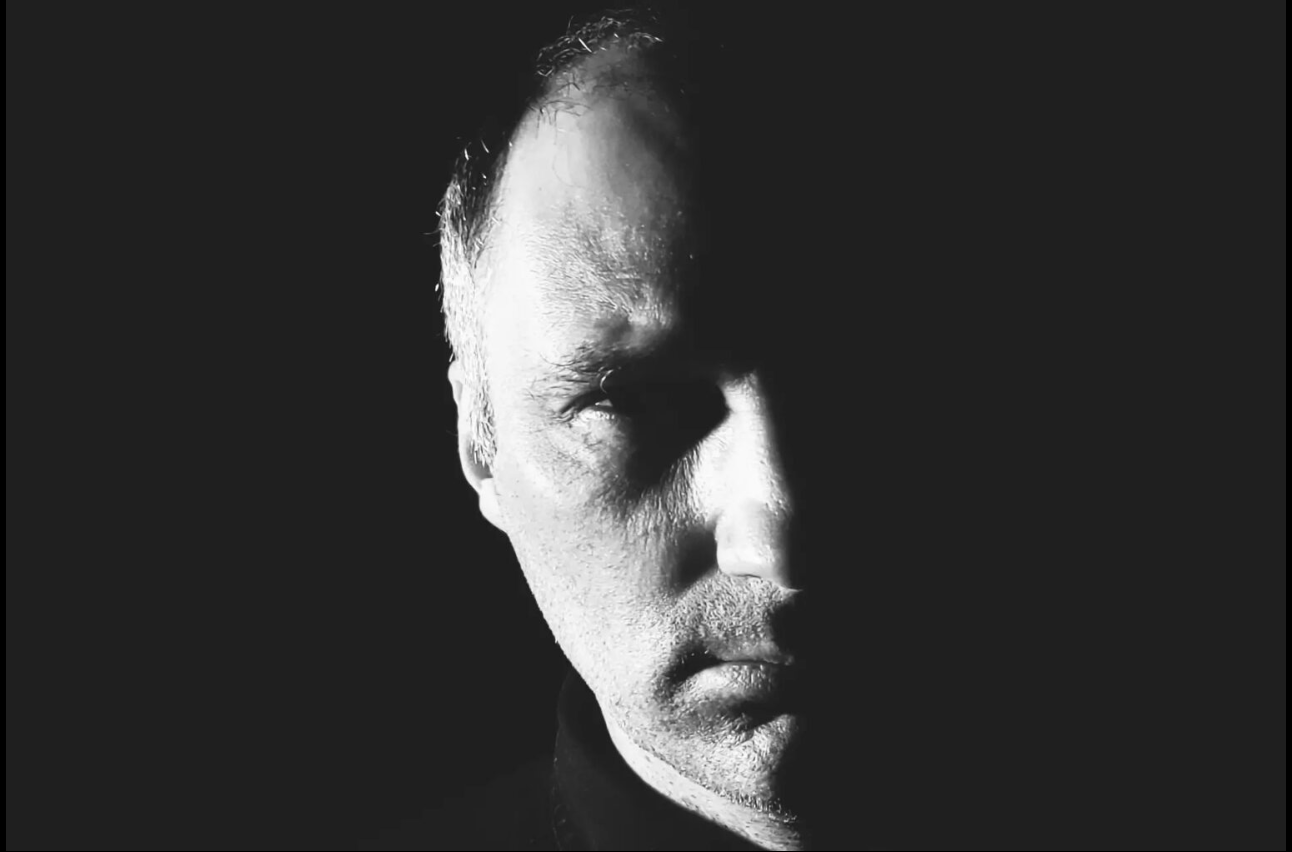
Born in Detroit in 1971 and raised in Duluth, Minnesota, Lafontaine‘s music is a reflection of his challenging life journey. Growing up on barroom floors, he found solace and expression in music, particularly through his guitar. His style, influenced by diverse artists ranging from Metallica to Beastie Boys to Stevie Ray Vaughn, blends rock, metal, and prog-rock. His LP, M.M.I., re-released in 2021, showcases this blend. Lafontaine’s upcoming EP, “Thorn, Sliver, Smolder,” continues his exploration, offering instrumental tracks that narrate his personal growth. His music is a testament to overcoming adversity and finding one’s voice through art. We dive into this creative process below.
- How has your music evolved over the years, and how do you see it reflecting your personal journey?
“From day one, I’ve been writing my own music on the guitar. Learning from other artists has been a challenge because I tend to take their work and create my own unique riffs and grooves. With dedication, discipline, and routine, I’ve gained a comprehensive understanding of song creation, arrangement, and dynamics. This has enabled me to deliver more captivating music to my listeners.”
“I consider music creation to be more than just a profession. Despite having little formal training, I have always relied on improvisation and my intuition to create something that sounds and feels good. I learned to play the guitar by relying on improvisating and emotions. Nowadays, I combine my natural approach with music theory and a disciplined routine to make my work more accessible to listeners.”
- Which artist or life event radically changed your approach to music?
I simply had a thirst for knowledge. I kept finding myself at a roadblock in my writing. The songs had the same pace and feel, creating a mundane tone and repetitiveness. So out of frustration, I started aggressively banging down on chords, and I must have hit the right chord because it gave me goosebumps. This led me to investigate why this one chord change gave me so much feeling, and I started to dive into music theory.
However, the issue then became the countless YouTube versions of how to teach music theory, along with the countless interpretations of music theory. Again, I became extremely frustrated and turned back to my influences. Eddie Van Halen stated it best for me, “There are only 7 notes in a scale. Use them how you like.” This helped me because it brought it down to earth.
Slowing down and learning in baby steps, I still had an issue with a routine. That is when I stumbled upon a book called “The 7-day practice routine for Guitarists” by Craig Smith. Craig Smith set this routine with specific parts of the guitar and music theory. Once I practiced discipline with this routine, in a very short timeframe, I understood what a Mode was and where a mode comes from. I also learned how chords are created and where they come from, and how important it is to keep a steady disciplined routine not just for better playing ability but also for learning.
- How would you describe your creative process?
I usually start with a riff or beat that moves me. I lay it down in its raw form with no foundation or arrangement. I then jam to it on a loop. If I have a good feel and ease of adding harmony or melody, I then start building the foundation.
The foundation for me is from the drums and the bass. If the drums and bass are not communicating in the melody, then there is no point in moving forward. A harmony/riff on a guitar, synth, piano, vocal, etc. is only as good as the foundation will allow it to be.
Once I have a foundation, I start to add harmony to whatever instrument I hear in my head. This could be the vocals, guitar, synth, piano, etc. This is the point where things start to get tricky because often adding harmony will set forth a change not only in the foundation but also in the arrangement of the song.
This is where I take a step back and allow the song to start creating itself. At this stage, I think a lot of artists tend to keep to a specific genre, stick to music theory, or just don’t allow the song to communicate what it wants to move forward. When an artist does this, it removes the personality of the piece.
When I was writing “Thorn,” I had a foundation, but I wasn’t allowing the song to tell me what or where it wanted to go next, so “Thorn” sat on the shelf for two years. I kept coming back to it only to run into the same issue. I was blocked. I couldn’t move forward.
I then tried a highly-regarded drum sym plugin. This plugin was so close to a real kit that it was a bit strange at first. I tested out a few grooves, and BAM, it just exploded the tone and feeling. What the song was trying to tell me is that the drum foundation was not enough and needed more movement.
With “Smolder,” I had a great intro, but I was stuck with the next move. I attempted many chords, time sig changes, and drum grooves. Nothing was working. I listened to what the song was attempting to communicate to me. I could feel a steady groove, but I was not feeling the guitar, so I picked up the bass, and instantly, I changed the key and kept a steady moving melody and rhythm. This became the body.
Many ask why there are no lyrics in “Thorn,” “Sliver,” “Smolder.” The songs didn’t want lyrics. Every time I would attempt to add a vocal harmony, the song’s personality would kick back for some reason.
This leads to how an artist knows when the piece is done. For me, it is when I play the song in its entirety, and it doesn’t sound like I wrote the piece, and the song is not telling me that there needs to be more. At this point, I start getting into sound production.
Now some would say that sound production has nothing to do with song creation, but I fully disagree. There have been many times when I enhanced an instrument or instruments, and based on the sound quality or tone, it changed the foundation, the style, how the parts are played, the arrangement, etc.
With that said, I have learned to make sure that the sound quality and tone are where they need to be, and then play the parts. This has saved me time.
This leads to the mixing and balancing process. Again, mixing and balancing have a huge effect on how you want the song to be perceived. I wanted “Thorn, Sliver, Smolder” to sound like the listener was in a stadium. I feel that too many artists nowadays mix and master to clean. If you listen to Black Sabbath, Zeppelin, and Robert Johnson’s recordings, they all have a feel based on the equipment they were using at the time.
For me, there is a huge difference in the way Zeppelin’s “No Quarter” sounds on vinyl than Spotify. Way more feeling on vinyl than the digital releases.
- What is your writing process like?
“My writing process is my creative process. I never set out to write a specific song based on anything. If the song calls for lyrics, I start asking questions like, “What story are you trying to tell?” “What does this song feel like?” “What time period does this story take place in?” This helps me get a better understanding of what the song is trying to convey.”.
- When you’re in the creative process, is there a consistent theme or emotion that drives your songwriting?
“No, I do not attempt to create based on an emotion, how I am feeling at that moment, what is happening to me in life, etc. I always let the song build itself. I have attempted to convey my feelings and/or emotions into a song and it always fails. I find it best to just let the song build on its own and create a personality.”
- Each aspect of music – writing, recording, practicing, and playing live – offers something different. Can you share a particularly meaningful moment from each?
Recording: “When I recorded M.M.I, there was a particular moment that struck me. I realized that the final product had originated from one simple riff. It was surprising how big the song became, and it didn’t sound like my usual style. After the mixing and mastering process, when I heard the final cut, I had a feeling that I couldn’t have created that. This made me think that music is not something that is created, but rather something that happens in one form or another.”
Practicing: I discovered that learning a small amount at a time is more effective than trying to learn many things at once. When I feel frustrated, I take a break and move on to something else. Instead of trying to play fast, I focus on playing well by paying attention to my technique. By staying disciplined in my practice routine, I have seen significant improvements in my guitar playing and music creation. These practices have been far more beneficial than being stubborn and rushing through my learning process.
Playing Live: “I once booked a gig at the Cabooze for a Tattoo Contest. I had written some fresh music and recorded it on a cassette tape. I didn’t have a band at the time and just wanted to see if I could pull off a live performance. About 100 people showed up to the event. During my set, I was just having fun and focusing on the music, not paying much attention to the crowd. When I finished the last song and looked up to say goodbye, I was surprised to see that the entire crowd, including the bartenders, were watching the stage. As soon as the crowd realized I was done, they burst into applause. I thanked the crowd and walked off the stage. Several friends rushed up to me with excitement and told me how good the performance was. This was unexpected and it stunned me.”
- Do you take advantage of technology and collaborate remotely, or do you wait until you’re physically present with the rest of the band?
“I’m sorry to say that I don’t currently have a band. I do have a few friends that I collaborate with, but it’s only to exchange ideas, not to work on finished pieces. I perform, write and produce all parts of my music by myself.”
- Is there a song in your repertoire that holds a particularly deep personal meaning for you? Can you share the story or inspiration behind it?
“Among my compositions “M.M.I” and “Thorn, Sliver, Smolder”, I consider the latter as my best work. This is because I allowed the song to build on its own, and listened to what the song wanted to become, rather than forcing it to be what I envisioned. This approach gave the song a more dynamic personality, making it stand out from my other works.”
 Modern Mystery