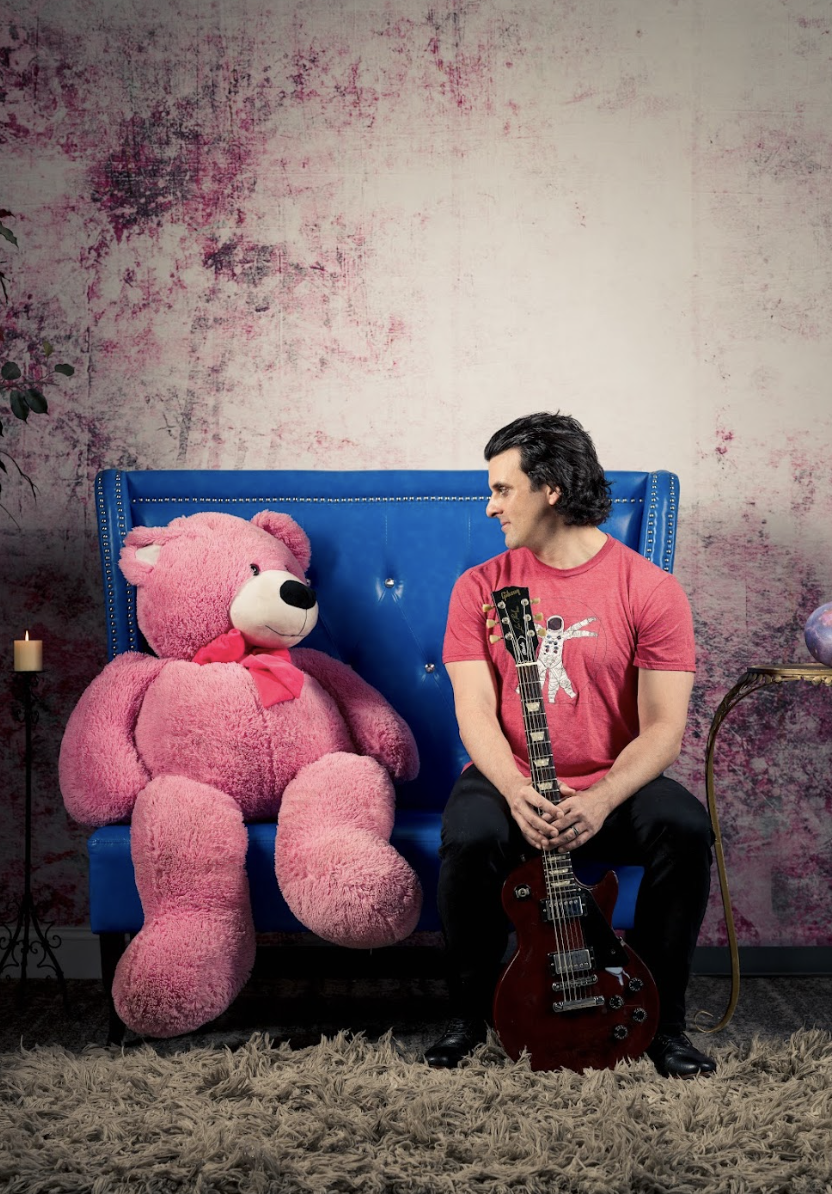
Brooklyn-based artist Jason Vitelli, known for his lyrical singer-songwriter releases, embarks on a paradoxical journey with his latest project. “Ambient Corridors” represents a departure from his typical lyrical approach, instead offering a purely instrumental collection that harks back to his musical origins.
Jason’s musical journey began in 2003, where he honed his craft by creating music for student films, documentaries, and short films while collaborating with accomplished film composers. Many of the compositions featured in this project have been carefully selected from that earlier period, refined, and rejuvenated. As Jason explains, it’s a “return to form,” an opportunity to revisit and build upon work from years past.
Although his electronic palette from the early 2000s may appear more limited compared to modern software libraries, Jason’s imaginative prowess and compositional aptitude shine through in his orchestration, original sampling, and sound design. Across the 12 tracks of “Ambient Corridors,” acoustic instruments like cello, viola, piano, electric guitar, and a variety of woodwinds, along with Jason’s electronic manipulation of found objects, create an impressionistic auditory journey. He describes his fascination with the interplay between synthetic and real elements, emphasizing how the interaction between human and programmed performances can yield entirely new sonic landscapes.
The titles of his compositions often emerge as sensory experiences, blending the visual and auditory realms in a synesthetic fusion. For instance, “Chukchi Sea,” named after the Arctic ocean, evokes images of frozen landscapes, even though it wasn’t Jason’s initial intention when composing the piece. Similarly, “Lost and Found” draws inspiration from Baroque period music, with a structure resembling a Bach prelude and fugue. This piece tells a story of melodies coming together in harmony, akin to lost souls finally finding one another.
Among the tracks, “Exit Love Story” employs a moody, synthesized jazz trio, sharing its title with an indie film. Jason’s musical journey has included performances at historic New York listening rooms, gigs as a sideman for jazz ensembles, and even subway busking. His earlier releases, “No Photographs” and “Confluence,” set the stage for his third album, “Head Above Tide,” which received acclaim from the Nashville Music Guide as a “musical phenomena” that opened new possibilities within an ever-expanding musical universe.
“Ambient Corridors” serves as the first installment of what Jason envisions as a series of instrumental releases, offering a counterpoint to his singer-songwriter projects. He sees this new direction as a valuable means of conveying emotions and thoughts without the constraints of lyrics. Furthermore, instrumental music allows room for interpretation by the listener. As Jason reflects, “Songwriting often emerges from inner turmoil and psychological struggles, leading to a more linear narrative. This may leave less for the listener to interpret. In contrast, instrumentals provide a canvas for the mind to breathe and wander freely. Ultimately, this music is a reflection of who I am in the moment of creation, and who knows, I may evolve into someone entirely different by day’s end.”
Tell us the story of this song, why did you choose to visualize this song specifically in this way? – I wrote the piece originally as a “wild track” for possible use on an upcoming film project. During this time, my housemate and I owned a cat. She was such an important part of my life and in many ways, was an inspiration for the music on 1. Ambient Corridors. This tune in particular was inspired by her playfulness; the clarinet instrumentation conjures memories of the Cat Theme from Prokofiev’s Peter and the Wolf.
What was the inspiration behind this video (visuals, storyline, etc.)? After naming the tune “Snazzy Cats,” I wanted to bring some feline playfulness to the eye. There is no storyline here; this video functions more as a musical visualization.
What was the process of making this video? I created the sound wave overlay via Renderforest and obtained through their platform the stock footage and animations. I then imported the assets into Final Cut Pro and edited them together. I also brought in meowing and purring sounds from various sample libraries.
 Modern Mystery