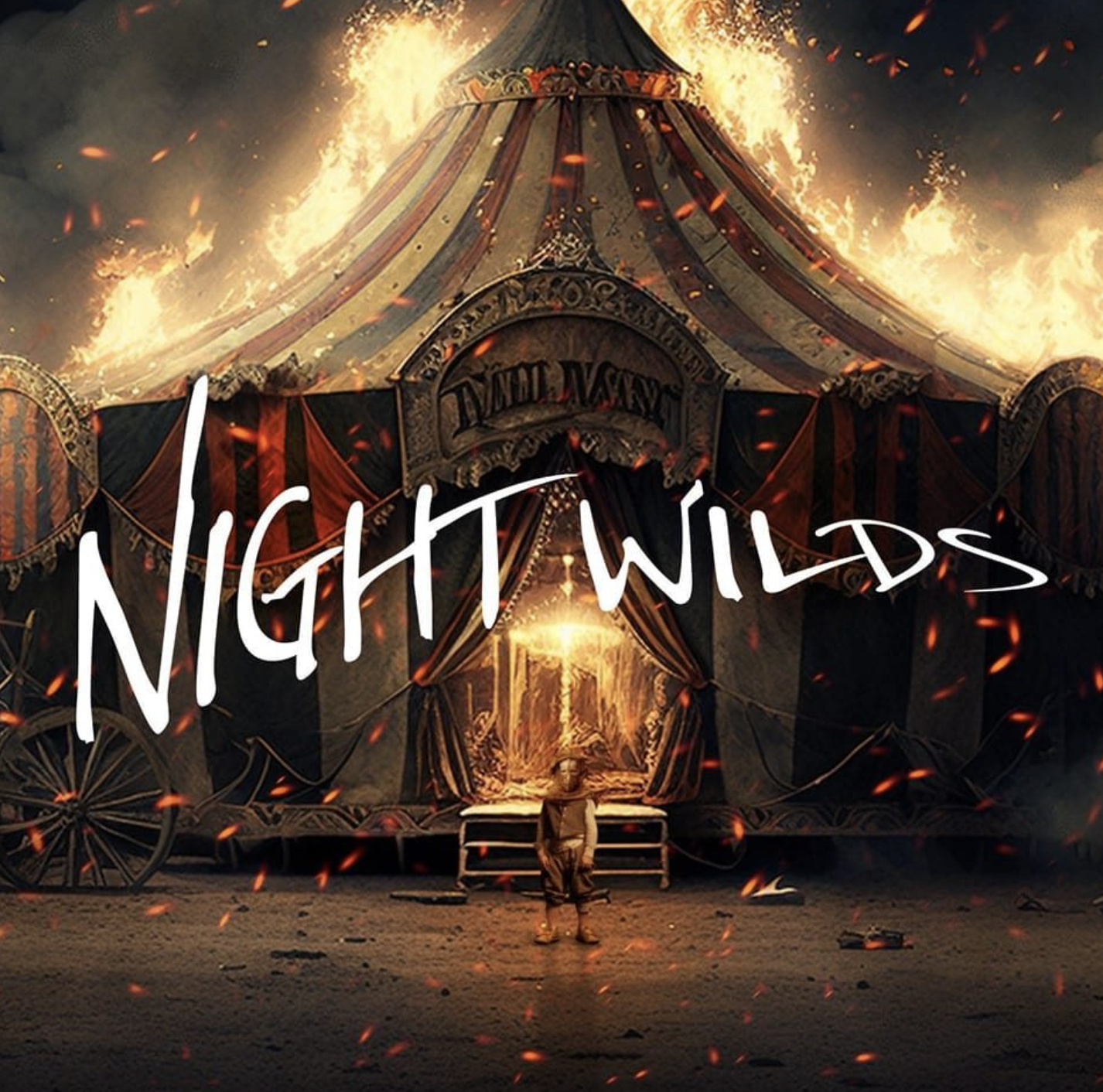
Night Wilds is rolling out their debut album, All That Should Have Been, one single at a time. Comprising 17 meticulously crafted tracks, this isn’t just an album; it’s a full-fledged concept project. The narrative arc follows the harrowing journey of a young boy raised in a suffocating environment where the stakes are as high as they come: perform or perish.
All That Should Have Been is an album of healing. Much like Pink Floyd’s The Wall, along with modern epics by Tool, Radiohead, and even Rage Against The Machine, it blurs the line between entertainment and enlightenment. The record’s thrilling narrative is viscerally enhanced by the project’s strictly analog ethos. No corners were cut on All That Should Have Been—even the string arrangements are real—and the songs feature world-class musicians recorded on vintage recording gear at storied studios in the band’s Seattle hometown.
But this album goes beyond mere storytelling. It delves into the complex psychology of addiction, exploring how these destructive patterns take root and, eventually, begin to loosen their stranglehold on the soul. It’s a transformative tale that takes the listener from the depths of self-loathing to the heights of self-acceptance. Along the way, it tackles the thorny issue of religious upbringing, ultimately leading to the discovery of a more authentic spiritual path.
With their first full production video “New Jerusalem” we get a glimpse into just how harrowing it is.
- Tell us the story of this song, why did you choose to visualize this song specifically in
this way?
The song is about the suffering that can be created in certain religious places where the image people protect is far more important than who they are and children and family become mirrors to reflect something vs humans. The song tells a story of a little boy in that world trying to find himself first by fitting in as children so often will do no matter what environment they are placed in. Yet, the violence which is hidden in this world can be seen in clues like the blood stains on his collar or the bruises on his wrist and that violence must go somewhere so it comes out in little places like a violent picture of two pirates killing each other and wherever it leaks out he is served more suffering as a reminder to seal the gap and never let it come out. This, of course, has severe consequences for the child who attempts to lock those parts of himself away in a cage in a very dark room where he is only a mirror for others to see what they wish to see in themselves in his face. His hope is to keep it all locked deep within but in the darkness, it festers and grows. This seems hopeless but at the very end of the video there is a ray of light that reaches through all the blackness and holds his heart, this is hope, and the story of God beyond man or religion and finding true connection after trauma.
- What was the inspiration behind this video (visuals, storyline, etc.)?
I covered some of this in the first question, but the visuals I choose to set in the period of WW2, to tie to the overall story of the generational trauma that leads to these places and forms of systems. Both my grandparents were veterans of wars and my Jewish lineage also has been touched by historical trauma which makes its way down through the ages and settles where it does like a rock rolling downhill. The story then is set back in time to showcase a feeling of the war and the world as it was then but as a metaphor for the hidden war that the boy is trying to hide now. These images are seen in his excitement to see a young girl playing who he thinks is cute but then the image behind her turns suddenly dark and like a battlefield. He begins to see battle and war and the scars of it across everything now as his worldview is formed.
- What was the process of making this video?
We shot this video in LA working with Zane Productions. I chose the cast carefully to find the exact right people to tell the story and then coached them on the back stories they have. We shot at a few locations and then I was heavily involved in the editing to tell a very specific story with a lot of nuance. That being said, Zane did a fantastic job with the setup and coaching to ensure we got every shot we needed. It was a thrilling experience and one I hope to repeat.
Watch The Video Here:
 Modern Mystery