Andrea Superstein is one of the most versatile voices in Canadian music today. Adding savvy vocals to whatever she touches, from nu-jazz and downtempo electronica to Latin grooves, Andrea lures listeners in with killer improvisational instincts, exceptional storytelling, and a red-hot band. Her music exemplifies powerful vocals evoking the gentle and the strong, the light and the dark, deep blues to pop confection, often in the same song.
In jazz, it’s common practice to reimagine existing songs. Andrea’s inspiration to arrange this particular song was a desire to focus on the present. She chose to cover Weezer’s “Say It Ain’t So” to pay homage to a song that was part of the soundtrack of her younger days. It’s a song that many people from her generation know and love, which is why it was the perfect choice for her to revisit from a fresh perspective and different instrumentation.
This single will be followed by a full length album later this year, Oh Mother, of mostly original songs. It chronicles stories of motherhood, rooted in Andrea’s own experiences and those of over 50 mothers who so bravely shared their stories.
“I really enjoy the challenge of taking a song that’s meaningful to me and finding a new way to interpret it while still honouring the original,” says Andrea. “I love that a listener might not recognize the song at first. I love that a less adventurous listener might say, ‘Hey, maybe this kind of jazz is worth checking out.’ Weezer is the gateway drug to jazz!”
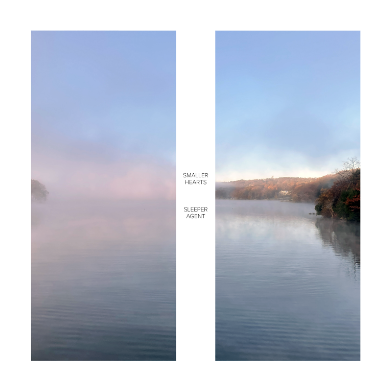
The Halifax synth-pop duo, Smaller Hearts, began as a game. Kristina Parlee and Ron Bates tore up a bunch of pieces of paper, and on each they wrote a word that could describe a song: slow, fast, quiet, loud, odd time signature, with or without certain instruments, et cetera. Then they’d mix the paper all up in a bowl and pull out a few. The results were treated as instructions: the corresponding song would be written and recorded to the random spec of the draw.
When Smaller Hearts first started, Parlee and Bates enforced a firm rule of no guitars allowed, as an effort to get out of their comfort zone. They stuck to this through three albums, but eventually this rule that was initially liberating had become a limitation. The synths are still at the forefront, but by permitting their earlier punk and indie rock styles to influence their current interests, Smaller Hearts believes that this song is one of the truest expressions of the sounds they love.
This song is partly about trying to escape reality by sleeping and dreaming—but also about the limits of that approach. Sleeping through your problems can feel like a relief; but at some point you might notice that you’re accidentally escaping a lot of good stuff as well as bad. Parlee and Bates wanted it to feel dreamy and optimistic, but tinged with melancholy. There’s a cloud of background noise throughout that frames the sunnier guitar melody and vocal harmonies—the hope is that it reflects the moment of pleasant confusion you feel upon waking from a hopeful dream.
“The title ‘Sleeper Agent’ doesn’t appear in the lyrics,” explains Bates, “but it metaphorically can stand for the song: our agency in deciding what parts of life to engage in versus what parts to tune out; and the change that can happen if a person who’s sleeping through their life becomes activated and wakes up.”
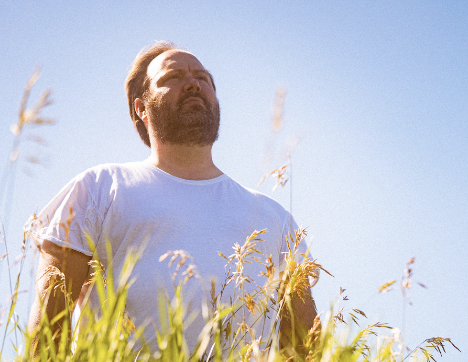
Ryan Hicks is a singer-songwriter, multi-instrumentalist, and producer from Regina, Saskatchewan. He cites Ron Sexsmith, Father John Misty, and David Bowie as influences for his melodic, cinematic, alt-pop music; as if Paul McCartney, Brian Wilson, and Fleet Foxes made music for David Lynch.
In anticipation of his fourth studio album, Experience, dropping on March 24th, Hicks shares a message of hope: “My dream is that like the kaleidoscope, all people can come together and see how beautiful the world is with all of our differences together.
His lush new single “Kaleidoscope” captures the spirit of peace and love in the ‘60s/‘70s, while sounding fresh and contemporary with its distinctive melody. The drum pattern of the verses sets up the satisfying and powerful chorus.
The psychedelic video evokes wonder and beauty, an affectionate nod to flower power.
Drawing inspiration from pop-punk, EDM, 80s synth-pop, hip hop, and everything in between, the four-piece Vancouver band, Royal Oak, has captured the maximalist energy of their anything-goes live show and distilled it into a string of high-gloss pop singles. Since their debut in 2015, Royal Oak has toured with the likes of Said The Whale, Hey Ocean!, and Ivory Hours.
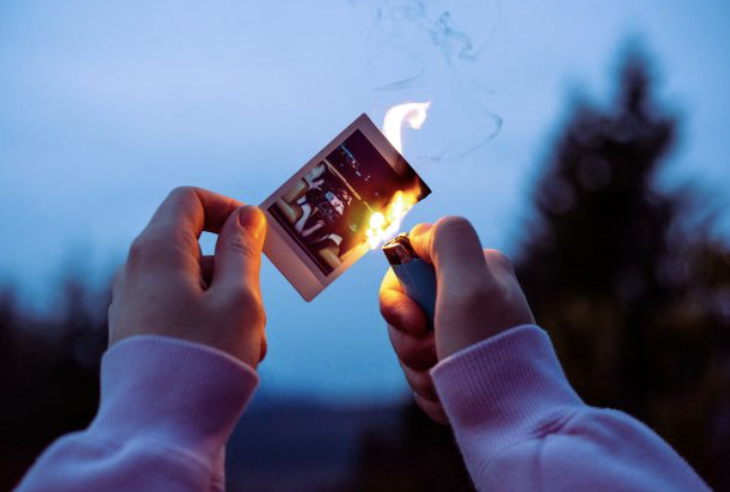
Like so many other songs, “A Song For Ya” was inspired by a breakup. Though it’s about one of the band member’s relationships, the song was written collaboratively by all the members of the band. Over Zoom, each band member would take turns tackling the song structure, vocal melodies, and lyrics.
Visually, the pop punk song follows the aftermath of the couple from Royal Oak’s previous single, “Steal My Hoodie.” The band has built a story around this couple and the stages of their relationship from their own experiences. The band created the artwork for “A Song For Ya” by referencing the artwork for “Steal My Hoodie,” printed on instant film.
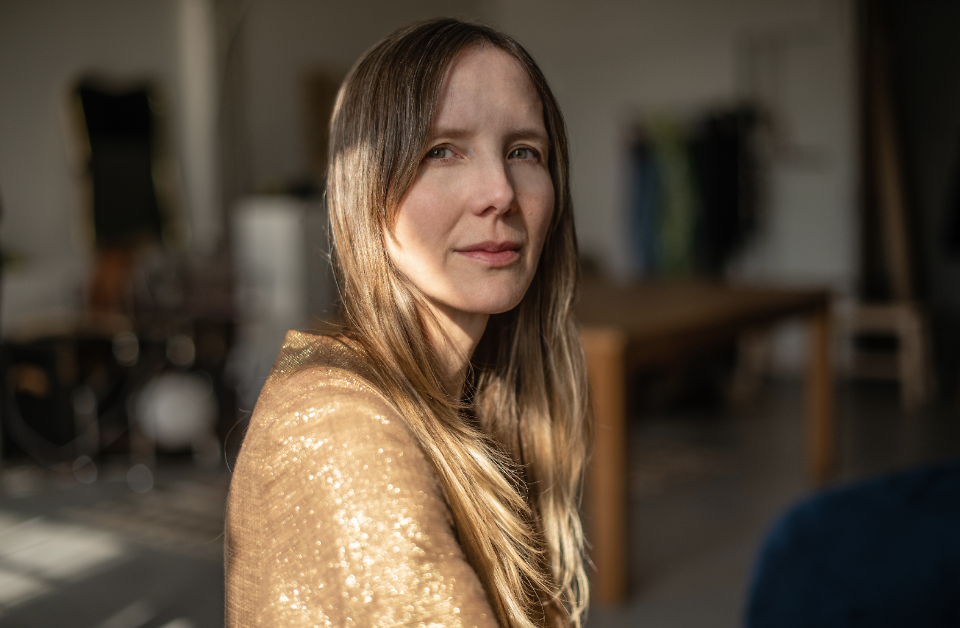
A hidden gem from the frozen heart of Toronto, ON, art school dropout and Sony Music Publishing artist La Faute (aka Peggy Messing) is releasing her lead single and music video, “Blue Girl Nice Day,” from the forthcoming debut album of the same name. La Faute is Messing‘s dark, dreamy solo project. A visual artist, multi-instrumentalist and singer-songwriter originally from Winnipeg, MB, she explores themes of surface vs. depth, longing, betrayal, mourning and desire.
“Blue Girl Nice Day” was inspired by the Milgram Experiments of the 60s, in which subjects were told to give ever-increasing electric shocks to a “learner” who had to repeat word pairs: Blue/Girl, Nice/Day, Slow/Dance, Sweet/Taste etc. Subjects were shaken to find that they would obey an authority figure and give lethal shocks to the learner, following orders even against their own conscience. The song reflects on how easily we can betray and hurt each other, and how we don’t necessarily know ourselves and what we are capable of. Dive into our Video Voyageur with La Faute, below!
1. Tell us the story of this song, why did you choose to visualize this song specifically? The song was first inspired by the Milgram experiment, this infamous social psychology experiment from 1961. It’s such a weird story. Volunteers thought they were assisting in a study about the effects of punishment on learning, and were told they’d be playing “teacher” by giving increasing electric shocks to the “learner” in the next room. I doubt the participants gave it much thought at first, as they were reassured by the experimenter in the suit and white lab coat that this was all perfectly normal. The teacher was taught to use a fake but official-looking shock generator, labeled from “Slight Shock” to “Danger: Severe Shock”. I wonder how many participants started to have doubts when they were led into the room to watch the learner be strapped into the special electrical chair with restraints.
The other participant, the learner, was played by an actor. They had to memorize and repeat word pairs : Blue/Girl Nice/Day Slow/Dance Sweet/Taste Soft/Hair Sharp/Needle Blunt/Arrow True/Story, and they always made mistakes. The true subject of these experiments was our volunteer doling out the shocks. I wonder what went through their minds as they increased the voltage higher and higher, while the learner cried out in pain, out of sight in the next room. Sometimes the learner would complain that they wanted to stop, that they had a heart condition, and would bang on the wall. Later, after the highest shocks, the learner would go quiet. I thought the words were so sweet and simple, like a little kid’s poem, but there’s a sharp needle at the end that hints at what else is going on.
The experiment found, surprisingly, that almost everyone would obey the authority figure and give extremely high, even fatal amounts of electric shock to the learner. Some subjects were visibly upset while complying with the instructions, and some were unbothered. After the true nature of the experiment was revealed to the subjects, they were thanked, paid a small fee and sent on their way. Many of them were shaken for the rest of their lives as a result of the experience.
I’m still thinking about this story, and what it means for how we care for and hurt each other, and how we surprise ourselves.
2. What was the inspiration behind this video(visuals, storyline, etc.)?
I didn’t want to make a literal visual reenactment of this experiment in the music video, the larger themes were just humming in my mind along with some events from my own life. I will say that the pandemic and illness and the ties and responsibility we have to each other was on my mind as I created the images of making my own bed and lying in it. How are we taking care of each other, how are we hurting each other during this time, or anytime. I had a stretch of a few years where I was quite physically sick, and was often in bed for many hours a day as I tried to find a way to recover, and adapt to the new normal. I noticed that for others sometimes you are out of mind when you are out of sight. That experience has been very eye opening to me, about how fragile we are. I guess everyone finds this out one way or another.
Looking back on that time is like a weird dream, where I saw the same view from my bed every day, but my mind wandered, out of step with the larger world. In this video I kind of represented that visually by putting the bed outside on a stormy day. I set it up in an empty field in a hydro corridor, one of the only parks that was open during the early part of the pandemic. At the end I filmed myself getting out of bed and getting distance from it, hoping I don’t have to go back to that time. I am shaken by the experience and what I’ve learned from it. I’m walking backwards in a lot of the shots but I filmed them walking forwards, so in my head I know it’s very possible I could go either way.
3. What was the process of making this video?
This is the funny part of the story, if you’ve made it this far. Picture me in a long white dress and a parka, pulling a busted three-wheeled kid’s wagon loaded with a giant folding bed, a tripod and some dumbells past a team of soccer players, through a muddy field and up a giant hill. Oh I was also dragging 2 big garbage bags with an inflatable mattress and all the blankets and sheets. I was so tired at the top of the hill I was glad I had thought to bring a bed! Then I sat there for a while in my dress pumping up the mattress as curious dog walkers wandered by. I shot everything myself on my phone, and I’m sure it all looked as ridiculous as it sounds. Luckily the weather was so cold and windy I was mostly on my own out there, and I feel like this is either an embarrassing story or it’s ART. I guess it’s both.
Following in the footsteps of Cohen, and with his deep and sultry Bowie meets Joy Division’s Ian Curtis vocals, Cairo-born Montreal-based singer/songwriter TEROUZ brings his signature retro pop to the scene by curating his original music with his taste for ‘90s nostalgia and ‘70s & ‘80s electro-pop/rock elements.
Along with his co-producer, mix engineer and keyboardist Gabriel Ethier (Garou, Azam Ali, Niyaz) TEROUZ carefully crafts his songs into intimate capsules, where one is intoxicatingly swayed to dive deeper into his cinematic stories.
“Tiger Girl” is a testament to resilient women and the empowering effects they have on others.
A cross between Bowie’s “China Girl” and Springsteen’s “Secret Garden” with a callback to the ‘voyeur’ vibes of The Police’s ‘‘Every Breath You Take,” it depicts a headstrong, feisty lead who leaves her mark on all those who cross her path.
The story is as much about growth through a deeper connection with someone, as it is about the hardness of growing apart and finally letting go. It’s an introspective look at what it is to really know somebody, from the smell of their skin to the way their brain works.


 Modern Mystery
You must be logged in to post a comment.